The short answer
Rehome your dog on LocalPetFinder, free
List your dog at no cost. They stay home until the right family is found, you screen adopters through a verified contact form, and you choose who adopts. Reviewed within 24 to 48 hours.
Why German Shepherds end up needing a new home
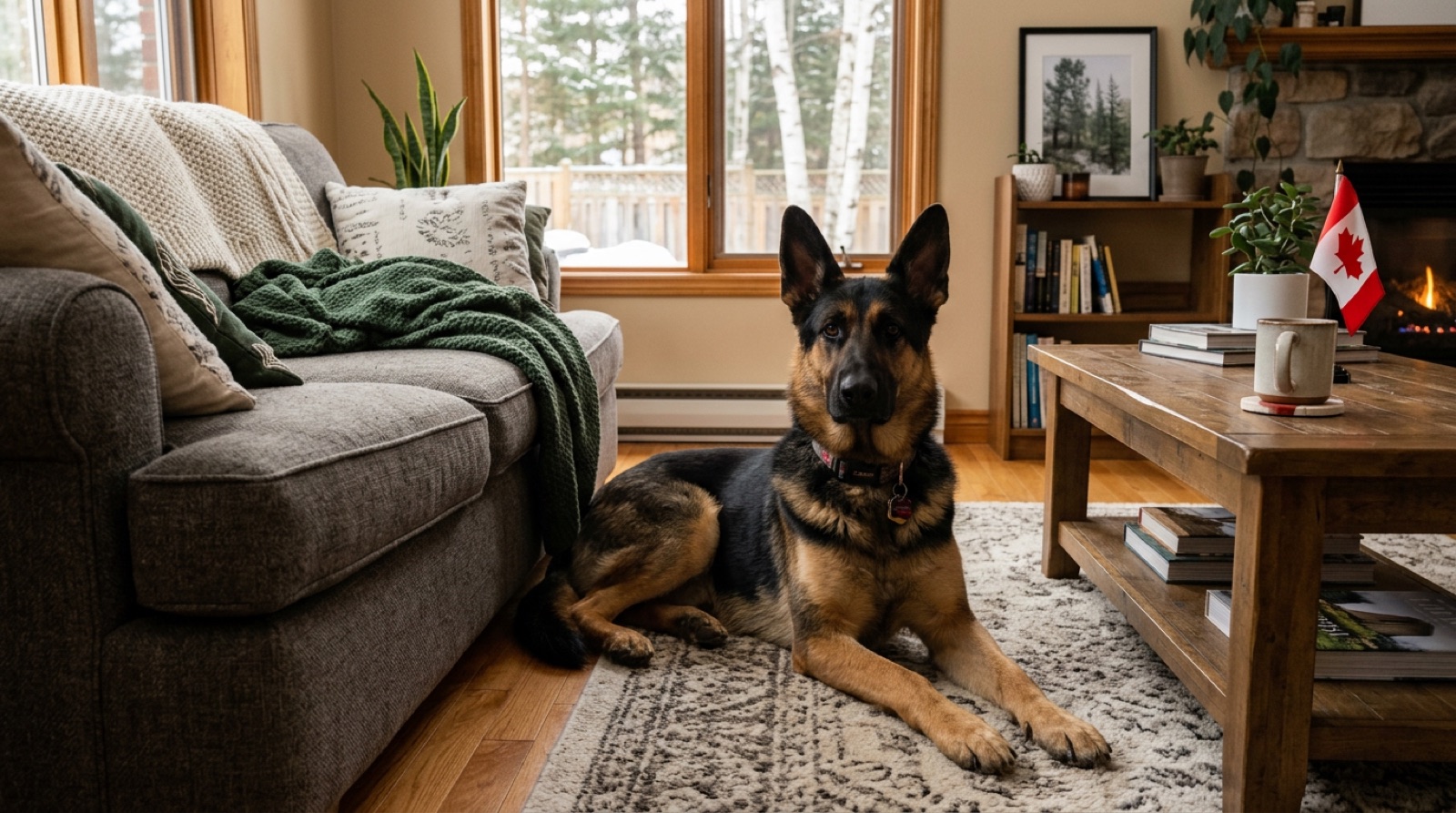
German Shepherds are one of the most capable and trainable breeds in Canada, which is exactly why a mismatch becomes obvious fast. The Canadian Kennel Club describes the breed as a dog of "exceptional stamina" that "needs lots of outdoor exercise to maintain condition." When that physical and mental work does not happen, a smart, driven dog finds its own outlet, and the behaviour gets harder to live with.
The recurring reasons owners reach the rehoming decision:
- Adolescent reactivity and fear. Between roughly six and eighteen months a German Shepherd can go through a reactive or fearful stage, barking and lunging at strangers, dogs, or noise. This is the single most common surrender trigger, and it is usually manageable with training, but it overwhelms first-time owners.
- Size, strength, and protective instinct. A GSD is a large, powerful dog that is naturally protective of its home and people. A dog that pulls hard, guards the door, or is wary of visitors needs a handler who can manage it, and not every home can.
- Under-exercised, under-trained. A bored Shepherd without a job becomes destructive, vocal, and anxious. The breed is built to work all day.
- Working versus show line mismatch. Working-line dogs in particular carry intense drive that suits sport or service work, not a quiet apartment. Many owners did not know which line they had until the energy showed up.
- Life changes. Moves, allergies, new babies, and financial strain account for a large share of surrenders that have nothing to do with the dog.
None of this means your dog is a lost cause. German Shepherds are among the most trainable breeds there is, which means an honest listing and the right home usually turn things around.
The three screening priorities unique to German Shepherds
A general rehoming guide tells you to screen adopters. For a German Shepherd, three checks matter more than anything else, and getting them right is what separates a placement that holds from a dog that bounces back in a month.
1. Match the home to your dog's reactivity. If your Shepherd is reactive, fearful, or protective, an experienced, active, adult-focused home is not a nice-to-have, it is the requirement. Ask candidly about the adopter's experience with large working breeds, whether they have used a force-free trainer, and how they plan to handle introductions. A confident, easygoing GSD has more options; a reactive one needs a narrower, more skilled home.
2. Secure physical fencing and a realistic exercise plan. This is a high-stamina breed. Ask about the yard, the fence, and the daily routine. A Shepherd that does not get real physical and mental work becomes the destructive, anxious dog that gets surrendered again. The right home has the time and the space.
3. Be brutally honest about temperament and any bite history. This is the most important rule for the breed and the one people are most tempted to soften. If your dog has ever bitten, snapped, resource-guarded, or shown serious fear or aggression, disclose it fully and in writing. Hiding it does not protect your dog, it puts the next family and the dog at risk, and it can collapse the placement or worse. Reactivity and bite history are different things; name which one you are dealing with. If aggression is the core issue, read our guide on rehoming a reactive or aggressive dog before you list.
German Shepherd rescues and where to ask
Breed-specific rescue can be a good option, but German Shepherd rescue intake in Canada is limited, geographically scattered, and frequently paused, and several long-standing GSD rescues either do not accept owner surrenders or are no longer reliably reachable online. We list a verified breed-specific Canadian GSD rescue here only when we can confirm it is active and accepting surrenders, so rather than send you to a dead link, the honest answer today is to work the channels that are open: contact German Shepherd and large-breed all-breed rescue networks across Canada directly (provincial GSD rescues, working-breed rescues, and reputable all-breed groups), ask your veterinarian or local shelter for a current referral, and list on LocalPetFinder in parallel so a screened direct rehoming stays open the whole time.
Should you charge a rehoming fee?
Charge a rehoming fee. For a healthy adult German Shepherd a few hundred dollars is normal in Canada, commonly in the $200 to $600 range depending on the dog, training, and what is included such as vetting, crate, or gear (this is a directional range, not a fixed rule). The fee does real work: it filters out people who collect free animals or flip desirable breeds, and it signals to genuine adopters that you take the dog's welfare seriously. If you would rather not keep the money, donate it to a German Shepherd or large-breed rescue afterward.
How LocalPetFinder rehoming works
- Submit a free listing at /rehome/submit. Photos, age, breed, spay or neuter status, compatibility, an honest behavioural profile, your reason for rehoming, and a fee. The form takes about 5 minutes and your dog never leaves your home.
- We review it for completeness and basic safety, usually within 24 to 48 hours, then it goes live.
- Your German Shepherd appears alongside rescue dogs on the German Shepherd listings and the main adoption pages, marked “Owner Rehoming.” Your email stays private.
- You screen and choose. Vetted adopters reach you through a verified contact form. You decide who to respond to, who to meet, and who gets the dog.
Ready to rehome your German Shepherd responsibly?
List your German Shepherd on LocalPetFinder for free. Your listing appears next to rescue dogs, you control the screening, and we never share your email publicly.
Start Your Free Listing →Anti-scam rules (read every line)
- Never list as “free to good home.” A fair fee is the single best filter against flippers and bad-faith adopters.
- Insist on a meet-and-greet, ideally at the adopter's home. Anyone who refuses a home check is hiding their living situation.
- Be suspicious of anyone offering more than your fee, or pushing for a fast, no-questions handover.
- Get a written agreement and a vet reference, transfer the microchip registration, and prefer e-transfer over cash for a paper trail.