The short answer
Rehome your dog on LocalPetFinder, free
List your dog at no cost. They stay home until the right family is found, you screen adopters through a verified contact form, and you choose who adopts. Reviewed within 24 to 48 hours.
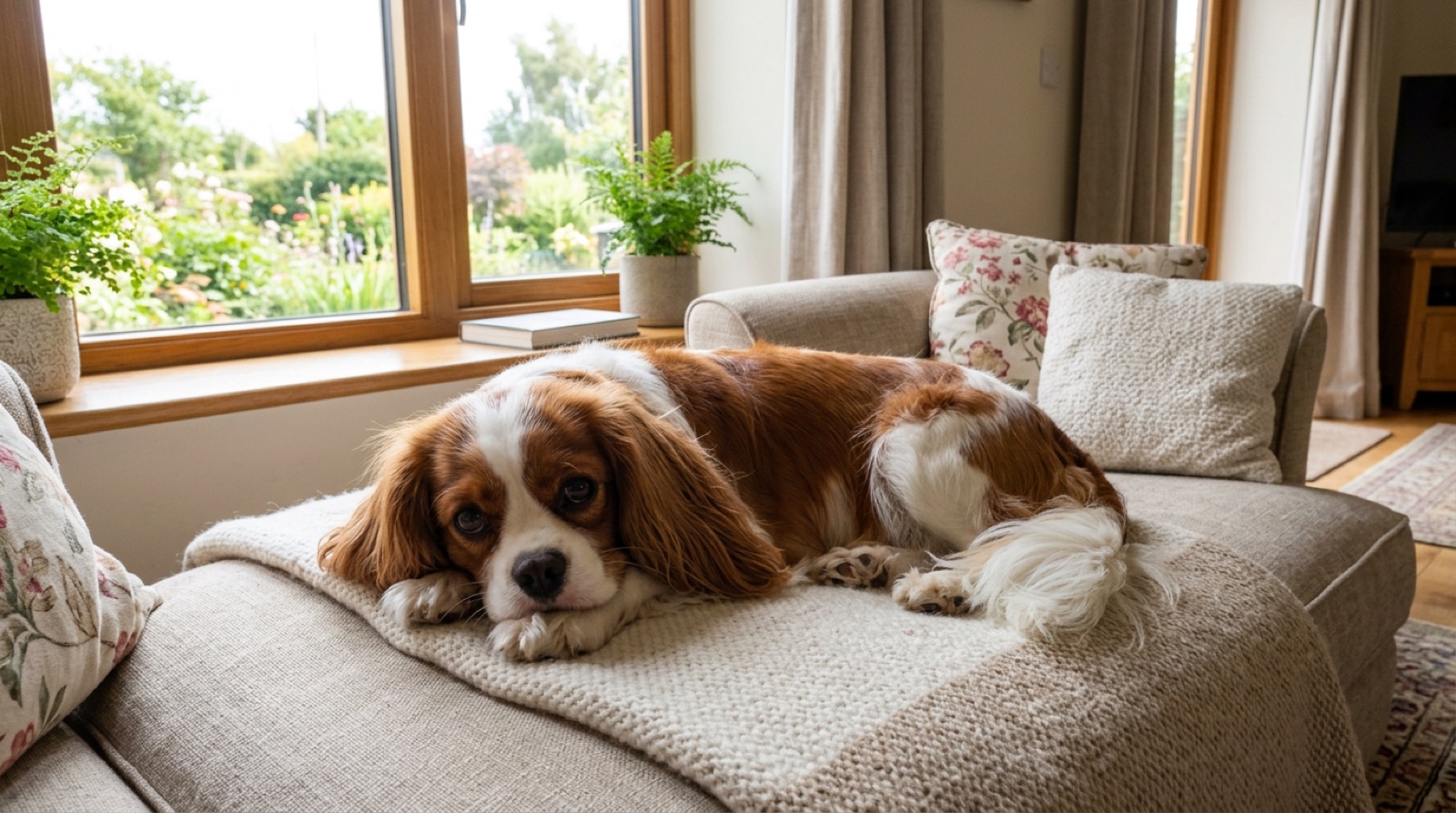
Why Cavaliers end up needing a new home
Cavaliers rarely get surrendered for behaviour. They are bred to be companions and they are good at it. The Cavalier King Charles Spaniel Club of Canada describes the breed as a sturdy little dog with genetic tendencies toward specific health problems, and that second half is the heart of most rehoming stories.
The recurring reasons owners reach the rehoming decision:
- Veterinary cost. The breed health profile can mean cardiology workups, lifelong heart medication, or neurological care, and those costs add up. Financial hardship is one of the most common honest reasons a Cavalier needs a new home. See our guide on rehoming due to financial hardship.
- A diagnosis the current home cannot manage. A heart murmur or a syringomyelia diagnosis can arrive at a hard time in someone's life, and a new home with more capacity is sometimes the kinder outcome for the dog.
- Life changes. Cavaliers are velcro dogs that do not do well left alone for long stretches, so a job change, a move, or a new schedule that leaves the dog isolated is a frequent trigger.
- Separation distress. The same affectionate nature that makes Cavaliers wonderful means many struggle with being alone, which can surface as anxiety or housetraining lapses.
None of this means your dog is a problem. A Cavalier is one of the most rehomable dogs there is. The work is not finding interest, it is making sure the next home goes in with eyes open on the health side.
The disclosure priority unique to Cavaliers
For most breeds the screening focus is the adopter's home and lifestyle. For a Cavalier, the priority flips. Your job is to disclose the breed health profile completely and honestly, because hiding it does the worst kind of harm: it lands a dog with a serious condition in a home that cannot afford or manage it. Treat this the way other breeds treat a bite history. It is the thing you do not get to leave out.
1. Disclose the cardiac picture in full. Mitral valve disease (MVD) is the defining health concern of the breed. UFAW notes that the great majority of Cavaliers develop some degree of MVD with age, and many are affected by middle age. If your dog has ever had a heart murmur noted, share the grade, the date, and any cardiology referral. If your dog is on heart medication, name it and the dose. If your dog has never been screened, say that plainly too.
2. Disclose any neurological signs. Syringomyelia (SM) is a painful spinal cord condition that is widespread in the breed. Signs include scratching at the air near the neck, sensitivity around the head and shoulders, or yelping for no obvious reason. If you have ever seen these, tell the adopter and share any vet notes. If you have not, the adopter should still know the breed risk so they recognise it early.
3. Hand over continuity of care. Give the new home the complete vet records, the name of your clinic, the medication schedule, and any specialist contacts. A Cavalier with a known condition is still very adoptable to the right person, but only if that person can pick up care without a gap. Continuity of care is the difference between a placement that protects the dog and one that lets a condition slide.
Cavalier King Charles Spaniel rescues and where to ask
Breed-specific Cavalier rescue in Canada is small and intake is limited, partly because most Cavalier owners contact their breeder first. Reach out early and list on LocalPetFinder in parallel rather than counting on a guaranteed spot. The main verified Canadian option:
Should you charge a rehoming fee?
Charge a rehoming fee. For a healthy Cavalier a few hundred dollars is normal in Canada, commonly in the $300 to $600 range depending on the dog, age, and what is included such as recent vet care (this is a directional range, not a fixed rule). A fee filters out flippers and people who collect free purebreds, and a Cavalier is a desirable, resellable breed, so a free-to-good-home listing carries real risk. If your dog has a known condition you may choose to lower or waive the fee for the right experienced home, but always vet the adopter the same way. You can donate the fee to a Cavalier rescue afterward if you would rather not keep it.
How LocalPetFinder rehoming works
- Submit a free listing at /rehome/submit. Photos, age, breed, spay or neuter status, compatibility, an honest behavioural profile, your reason for rehoming, and a fee. The form takes about 5 minutes and your dog never leaves your home.
- We review it for completeness and basic safety, usually within 24 to 48 hours, then it goes live.
- Your Cavalier King Charles Spaniel appears alongside rescue dogs on the Cavalier King Charles Spaniel listings and the main adoption pages, marked “Owner Rehoming.” Your email stays private.
- You screen and choose. Vetted adopters reach you through a verified contact form. You decide who to respond to, who to meet, and who gets the dog.
Ready to rehome your Cavalier King Charles Spaniel responsibly?
List your Cavalier King Charles Spaniel on LocalPetFinder for free. Your listing appears next to rescue dogs, you control the screening, and we never share your email publicly.
Start Your Free Listing →Anti-scam rules (read every line)
- Never list as “free to good home.” A fair fee is the single best filter against flippers and bad-faith adopters.
- Insist on a meet-and-greet, ideally at the adopter's home. Anyone who refuses a home check is hiding their living situation.
- Be suspicious of anyone offering more than your fee, or pushing for a fast, no-questions handover.
- Get a written agreement and a vet reference, transfer the microchip registration, and prefer e-transfer over cash for a paper trail.