The short answer
Rehome your dog on LocalPetFinder, free
List your dog at no cost. They stay home until the right family is found, you screen adopters through a verified contact form, and you choose who adopts. Reviewed within 24 to 48 hours.
Why Border Collies end up needing a new home
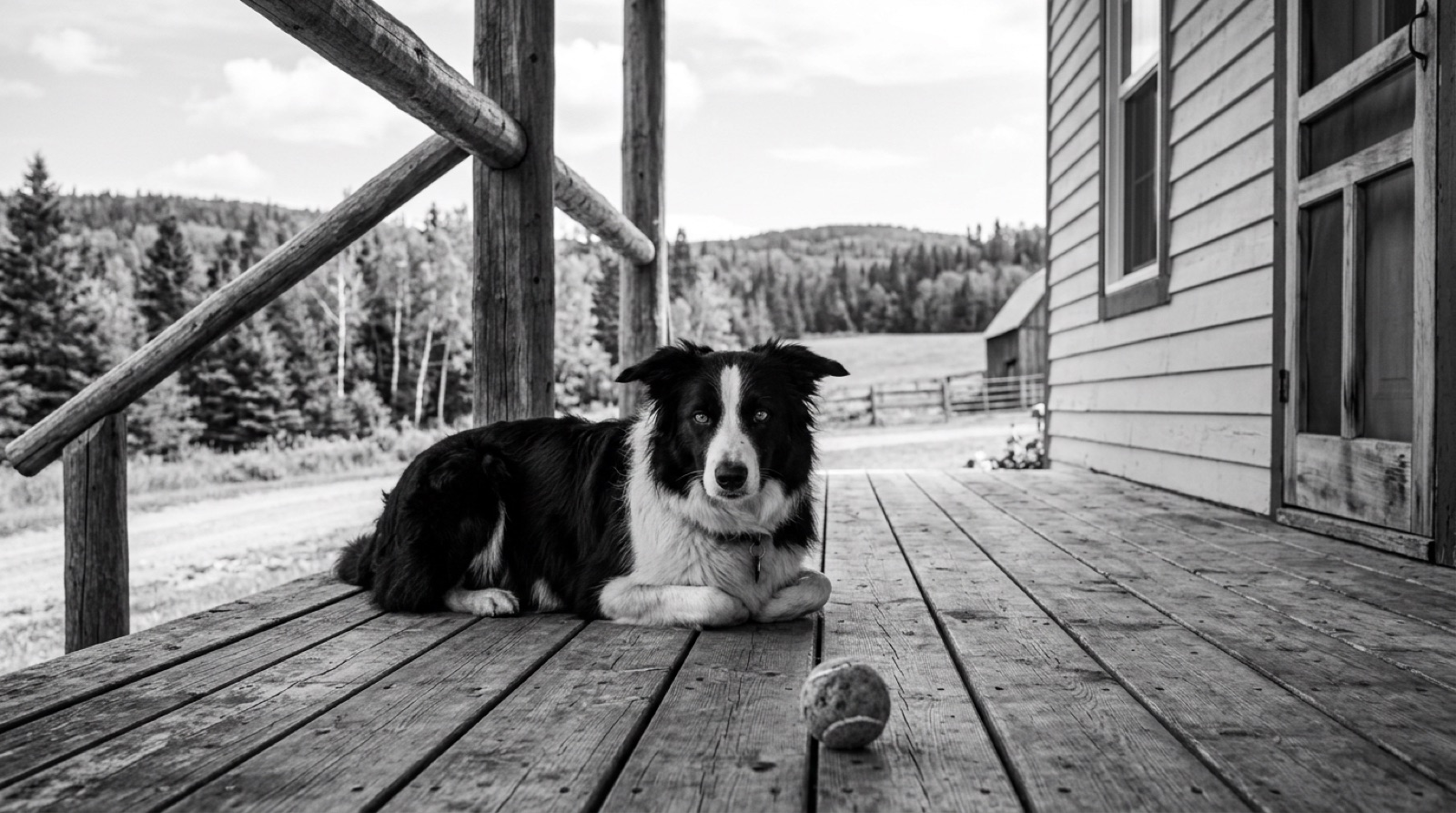
Border Collies are widely rated the most intelligent dog breed, and that is exactly why so many end up rehomed. The Canadian Kennel Club describes the breed as a tenacious, hardworking sheepdog, keen, alert, and intensely responsive. A dog built to work sheep all day does not switch off in a quiet house. When the work is missing, the dog invents its own.
The recurring reasons owners reach the rehoming decision:
- Exercise and mental needs a casual home cannot meet. A walk is not enough. Without a real job or sport, a Border Collie gets destructive, anxious, and obsessive (pacing, light or shadow chasing, fixating on movement).
- Herding drive pointed at the wrong target. The instinct to gather and control does not need sheep to fire. Many Border Collies herd children, chase bikes, joggers, and cars, and nip at heels, which is alarming in a family home.
- Apartment or low-activity mismatch. People fall for the look and the famous intelligence, then discover the breed is not suited to a sedentary household and underestimate the daily commitment.
- "Too smart" for the situation. A bored, brilliant dog learns to open doors, outwit barriers, and escalate, which reads as a behaviour problem but is really an unmet-needs problem.
- Life changes. A move, a new baby, a job change, or a schedule that no longer allows the hours this breed demands.
None of this means your dog is broken. It means the breed needs more than the situation could give, which is exactly the kind of thing a thoughtful rehoming fixes.
The screening priorities unique to Border Collies
A general rehoming guide tells you to screen adopters. For a Border Collie, the screening is really one big question with an honesty problem attached, and getting it right is the difference between a placement that sticks and a dog that ricochets through two or three homes.
1. Confirm a genuinely active home with a real outlet. Do not accept "we have a big yard" or "we go for walks." A yard is storage, not stimulation. Ask what the dog will actually do every day: agility, flyball, herding, frisbee, long structured hikes, scent work, obedience training, or an active owner who runs or bikes with the dog. The best Border Collie homes have a hobby that needs a dog, not just space for one. If the adopter cannot describe a daily plan, they are not the home.
2. Watch for the boredom-destruction failure mode. The single most common reason a rehoming fails is that the new household is just as under-stimulated as the last one. Walk the adopter through what your dog does when bored (chewing, pacing, fixating, nipping, escaping) and make clear those are not behaviour defects, they are the breed asking for work. A home that hears this and still wants the dog is a home that understands it.
3. Disclose the herding drive honestly. If your dog herds, nips heels, chases bikes or cars, or has reacted to children, say so plainly in the listing. Hiding it does not make it disappear, it just relocates the problem. Honest disclosure lets an experienced, child-free, or dog-savvy adopter self-select, which is exactly who you want.
Border Collie rescues and where to ask
Breed-specific rescues are a strong option for Border Collies because they understand the drive and screen adopters accordingly, but intake space is limited and often waitlisted, so contact them early and list on LocalPetFinder in parallel. A few verified Canadian options:
Should you charge a rehoming fee?
Charge a rehoming fee. For a healthy adult Border Collie a few hundred dollars is normal in Canada, commonly in the $200 to $500 range depending on the dog, age, training, and what is included (this is a directional range, not a fixed rule). A fee filters out people who collect free dogs and signals to good adopters that you take the dog's welfare seriously. It also slows down impulse takers, which matters for a breed that needs a committed working home rather than a casual one. You can donate the fee to a Border Collie rescue afterward if you would rather not keep it.
How LocalPetFinder rehoming works
- Submit a free listing at /rehome/submit. Photos, age, breed, spay or neuter status, compatibility, an honest behavioural profile, your reason for rehoming, and a fee. The form takes about 5 minutes and your dog never leaves your home.
- We review it for completeness and basic safety, usually within 24 to 48 hours, then it goes live.
- Your Border Collie appears alongside rescue dogs on the Border Collie listings and the main adoption pages, marked “Owner Rehoming.” Your email stays private.
- You screen and choose. Vetted adopters reach you through a verified contact form. You decide who to respond to, who to meet, and who gets the dog.
Ready to rehome your Border Collie responsibly?
List your Border Collie on LocalPetFinder for free. Your listing appears next to rescue dogs, you control the screening, and we never share your email publicly.
Start Your Free Listing →Anti-scam rules (read every line)
- Never list as “free to good home.” A fair fee is the single best filter against flippers and bad-faith adopters.
- Insist on a meet-and-greet, ideally at the adopter's home. Anyone who refuses a home check is hiding their living situation.
- Be suspicious of anyone offering more than your fee, or pushing for a fast, no-questions handover.
- Get a written agreement and a vet reference, transfer the microchip registration, and prefer e-transfer over cash for a paper trail.