The short answer
Rehome your dog on LocalPetFinder, free
List your dog at no cost. They stay home until the right family is found, you screen adopters through a verified contact form, and you choose who adopts. Reviewed within 24 to 48 hours.
Why Labradors end up needing a new home
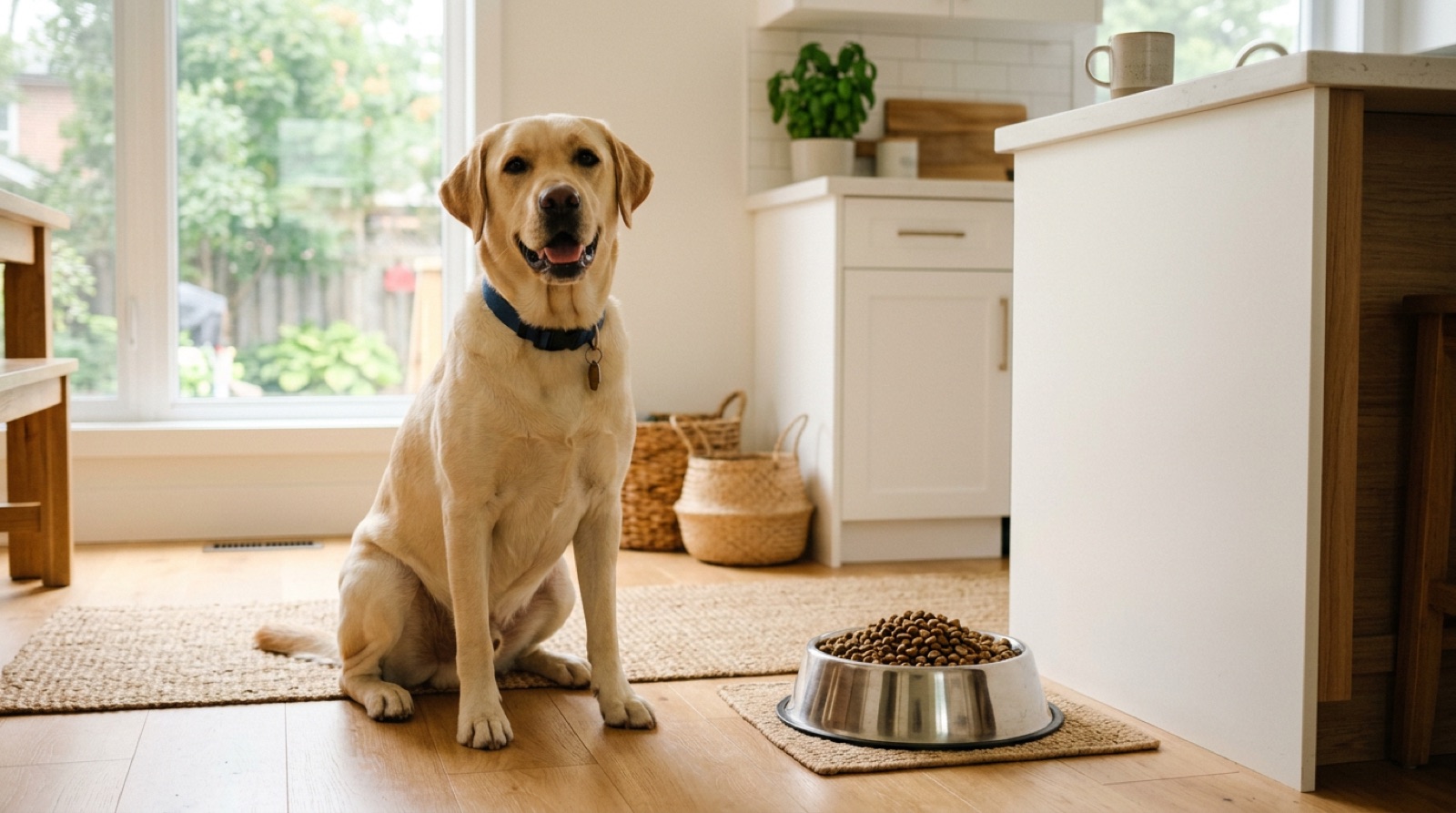
Lab surrenders are almost never about a bad dog. The Canadian Kennel Club credits the breed's "gentle ways, intelligence and adaptability" for its popularity, and that popularity is exactly the problem: a lot of Labs land in homes that wanted the calm adult and got the adolescent instead.
The recurring reasons owners reach the rehoming decision:
- The adolescent years. Labs are big, mouthy, bouncy puppies until age two or three. The jumping, chewing, and leash-pulling of a 70-pound teenager overwhelms households that expected the mellow dog from the commercials.
- A new baby. Labs need exercise and company, and a newborn erases both from the schedule. It is one of the most common honest Lab surrender reasons. If this is you, our guide to rehoming because of a new baby walks through it without judgement.
- Food obsession and counter-surfing. Labs are famously food-driven. Left unmanaged, that becomes raided counters, stolen lunches, and a dog that gains weight fast.
- Shedding and size costs. A large double-coated dog sheds year-round and eats and medicates at large-breed prices, which bites when money gets tight.
- Moves and rental limits. Many rentals cap dog weight well below Lab size, so a move can force the decision.
None of this means your dog is a problem. It means the situation changed or the breed's teenage stage outran the household, and a thoughtful rehoming fixes exactly that.
What to screen for when rehoming a Lab
Interest in a Lab comes fast, so the work is filtering, not finding. Three checks matter most.
1. An active home that expects the real Lab. Ask what a typical day looks like and how much exercise the household actually does. A young Lab needs real daily activity plus training, and a home that offers a fenced yard and nothing else is the same setup that led to rehoming. Family homes are a natural fit because Labs are one of the most reliable breeds with children, but the activity level has to be there.
2. A plan for food and weight. Tell adopters plainly how food-driven your dog is, whether it counter-surfs, and what it currently weighs. Obesity is the most common health problem in the breed and it accelerates joint disease, so you want an adopter who will measure meals and keep the dog lean, not one who shows love through snacks.
3. Realistic alone-time hours. Labs are companion dogs that do poorly left alone all day. Ask how many hours the dog would be by itself and what the plan is for workdays. Long, empty days produce the chewing and barking that end placements.
How long it realistically takes
For a healthy, friendly adult Lab with good photos, an honest description, and a fair fee, expect interest within days and a completed placement within two to six weeks, most of it spent screening. Puppies and young adults move fastest of any dog on the platform. Senior Labs and dogs with weight or joint issues take longer, sometimes a couple of months, because the right home is a smaller pool, but they do get placed when the listing is honest. The breed's popularity means you never need to hand your dog to the first applicant. Take the time to check a vet reference and meet the family.
What you must disclose
Labs are so easy to place that the temptation is to skip the awkward details. Do not. The placement only sticks if the new home knows the real dog.
- Weight and joints. Disclose the dog's current weight and any hip, elbow, or cruciate history. Joint disease is the breed's signature orthopedic problem and it is a real cost commitment for the new home.
- Food behaviour. Counter-surfing, garbage raiding, and any guarding around food bowls. Food guarding in particular must be disclosed in any home with children.
- Ear infections. Floppy-eared water dogs get them chronically. If your Lab is a repeat case, say so.
- Manners around small kids. Most Labs love children, but an untrained adolescent can flatten a toddler out of pure enthusiasm. Describe honestly how your dog greets people.
Honest disclosure is not a weakness in the listing. It is what filters for the home that can actually handle your dog, and it protects you from a failed placement that bounces the dog back.
Labrador Retriever rescues and where to ask
Labrador breed rescue in Canada is well established but intake depends on foster space, so contact them early and list on LocalPetFinder in parallel. A verified Canadian option:
Should you charge a rehoming fee?
Charge a rehoming fee. For a healthy adult Lab a few hundred dollars is normal in Canada, commonly in the $300 to $700 range depending on age and what is included, such as vaccines and spay or neuter (this is a directional range, not a fixed rule). The fee matters because Labs are the most in-demand breed in the country, and a free-to-good-home post attracts people who pose as adopters and resell popular dogs. A real fee filters them out and signals to genuine adopters that you take the dog's welfare seriously. You can donate it to a Lab rescue afterward if you would rather not keep it.
How LocalPetFinder rehoming works
- Submit a free listing at /rehome/submit. Photos, age, breed, spay or neuter status, compatibility, an honest behavioural profile, your reason for rehoming, and a fee. The form takes about 5 minutes and your dog never leaves your home.
- We review it for completeness and basic safety, usually within 24 to 48 hours, then it goes live.
- Your Labrador Retriever appears alongside rescue dogs on the Labrador Retriever listings and the main adoption pages, marked “Owner Rehoming.” Your email stays private.
- You screen and choose. Vetted adopters reach you through a verified contact form. You decide who to respond to, who to meet, and who gets the dog.
Ready to rehome your Labrador Retriever responsibly?
List your Labrador Retriever on LocalPetFinder for free. Your listing appears next to rescue dogs, you control the screening, and we never share your email publicly.
Start Your Free Listing →Anti-scam rules (read every line)
- Never list as “free to good home.” A fair fee is the single best filter against flippers and bad-faith adopters.
- Insist on a meet-and-greet, ideally at the adopter's home. Anyone who refuses a home check is hiding their living situation.
- Be suspicious of anyone offering more than your fee, or pushing for a fast, no-questions handover.
- Get a written agreement and a vet reference, transfer the microchip registration, and prefer e-transfer over cash for a paper trail.