The short answer
Rehome your dog on LocalPetFinder, free
List your dog at no cost. They stay home until the right family is found, you screen adopters through a verified contact form, and you choose who adopts. Reviewed within 24 to 48 hours.
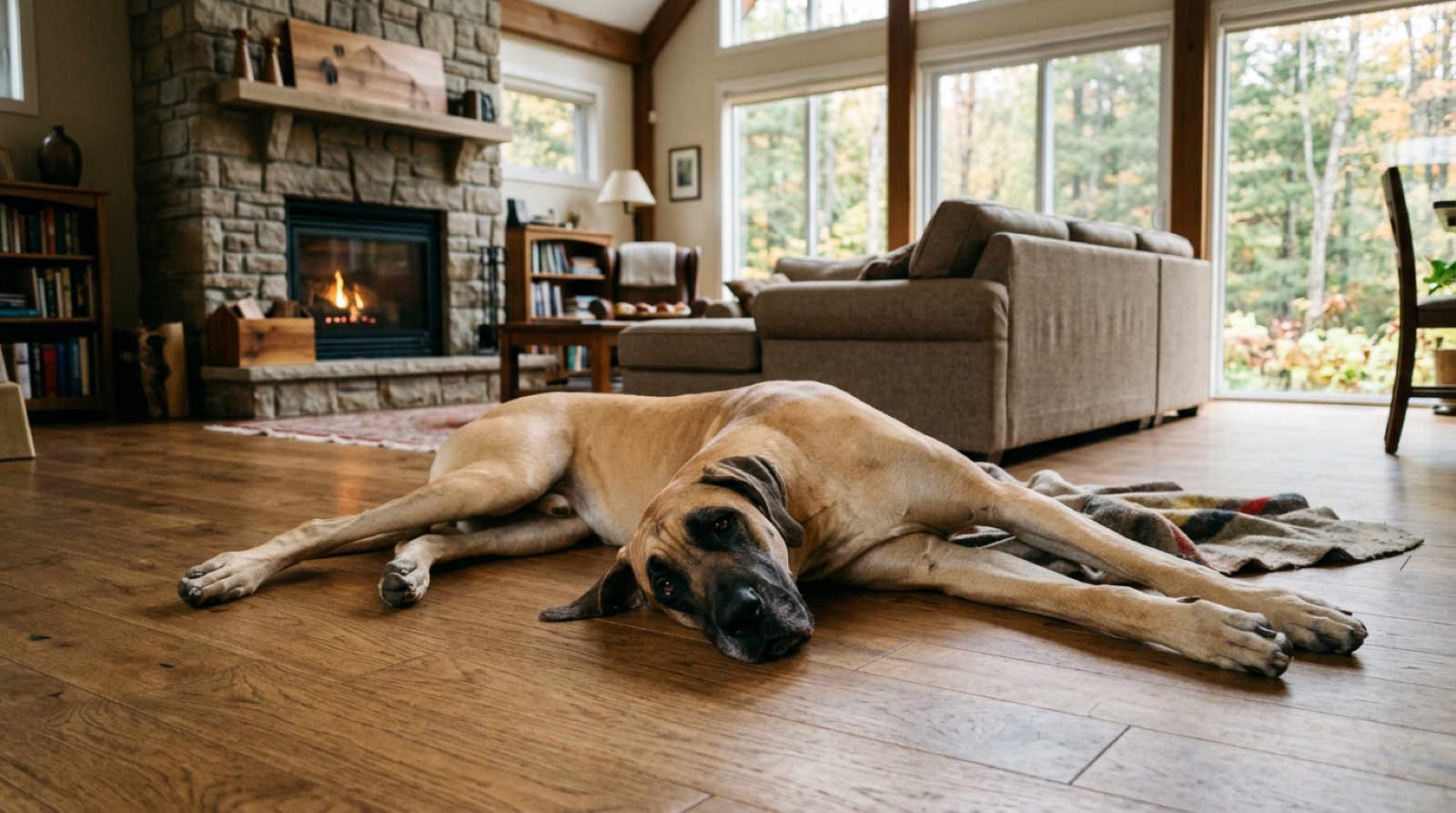
Why Great Danes end up needing a new home
Most Great Dane surrenders trace back to the same theme: the dog is wonderful, but the scale of owning one giant breed turned out to be more than a household could carry. The Canadian Kennel Club describes the Dane as a dog that adapts to city or country living but "needs room indoors as well as out." When that room, or the budget, is not there, the strain shows.
The recurring reasons owners reach the rehoming decision:
- Sheer size and space. A Great Dane is a genuinely large dog in a small space. Apartments, shared housing, and moves into rentals that do not allow giant breeds are common triggers.
- Food and vet cost. A Dane eats like the giant it is, and medication doses, surgery, and even routine care scale with body weight. Giant-breed costs catch many owners off guard.
- Giant-breed health. Bloat (gastric dilatation volvulus), cardiac disease such as dilated cardiomyopathy, and joint problems are all over-represented in the breed. A single emergency can cost thousands.
- Short lifespan and grief planning. Great Danes are not long-lived for a dog, and a change in family circumstance over those years often forces a rehoming.
- Outgrowing the home by surprise. A Dane puppy is cute and manageable. The adult is a different animal, and some owners are not ready for it.
None of this means your dog is a problem. It means the situation could not carry a giant breed, which is exactly the kind of thing a thoughtful rehoming fixes.
The two screening priorities unique to Great Danes
A general rehoming guide tells you to screen adopters. For a Great Dane, two checks matter more than anything else, because both the dog's safety and the new home's ability to keep it depend on them.
1. A home that can truly afford the space and the cost. This is the screen most owners skip. Ask directly about housing (room indoors, a yard or reliable space to move), and ask honestly about budget. A Dane's food bill, its weight-scaled medication and surgery costs, and the real chance of a giant-breed emergency mean a home that is stretched thin will face the same crisis you did. The goal is not to interrogate, it is to make sure the next placement sticks.
2. Bloat awareness and honest health disclosure. Great Danes are among the breeds at the very highest risk of bloat, a sudden twisting of the stomach that is fatal within hours without emergency surgery. Make sure the adopter knows the warning signs (a swollen belly, unproductive retching, restlessness, drooling) and knows it is a run-to-the-emergency-vet event, not a wait-and-see one. Just as important, disclose every health issue your dog has. Giant-breed conditions are expensive, and hiding a heart or joint problem only means the placement fails and the dog moves again.
Great Dane rescues and where to ask
Breed-specific rescues are a good option, but Great Dane rescue intake in Canada is limited and often paused, so do not count on a guaranteed spot. Contact them early and list on LocalPetFinder in parallel. A couple of verified Canadian options:
Should you charge a rehoming fee?
Charge a rehoming fee. For a healthy Great Dane a few hundred dollars is normal in Canada, commonly in the $200 to $600 range depending on the dog, its age, and what is included such as a recent vet check (this is a directional range, not a fixed rule). A real fee filters out people who collect free animals or flip desirable dogs, and it signals to good adopters that you take your dog's welfare seriously. If you would rather not keep the money, donate it to a Great Dane rescue afterward.
How LocalPetFinder rehoming works
- Submit a free listing at /rehome/submit. Photos, age, breed, spay or neuter status, compatibility, an honest behavioural profile, your reason for rehoming, and a fee. The form takes about 5 minutes and your dog never leaves your home.
- We review it for completeness and basic safety, usually within 24 to 48 hours, then it goes live.
- Your Great Dane appears alongside rescue dogs on the Great Dane listings and the main adoption pages, marked “Owner Rehoming.” Your email stays private.
- You screen and choose. Vetted adopters reach you through a verified contact form. You decide who to respond to, who to meet, and who gets the dog.
Ready to rehome your Great Dane responsibly?
List your Great Dane on LocalPetFinder for free. Your listing appears next to rescue dogs, you control the screening, and we never share your email publicly.
Start Your Free Listing →Anti-scam rules (read every line)
- Never list as “free to good home.” A fair fee is the single best filter against flippers and bad-faith adopters.
- Insist on a meet-and-greet, ideally at the adopter's home. Anyone who refuses a home check is hiding their living situation.
- Be suspicious of anyone offering more than your fee, or pushing for a fast, no-questions handover.
- Get a written agreement and a vet reference, transfer the microchip registration, and prefer e-transfer over cash for a paper trail.