The short answer
Rehome your dog on LocalPetFinder, free
List your dog at no cost. They stay home until the right family is found, you screen adopters through a verified contact form, and you choose who adopts. Reviewed within 24 to 48 hours.
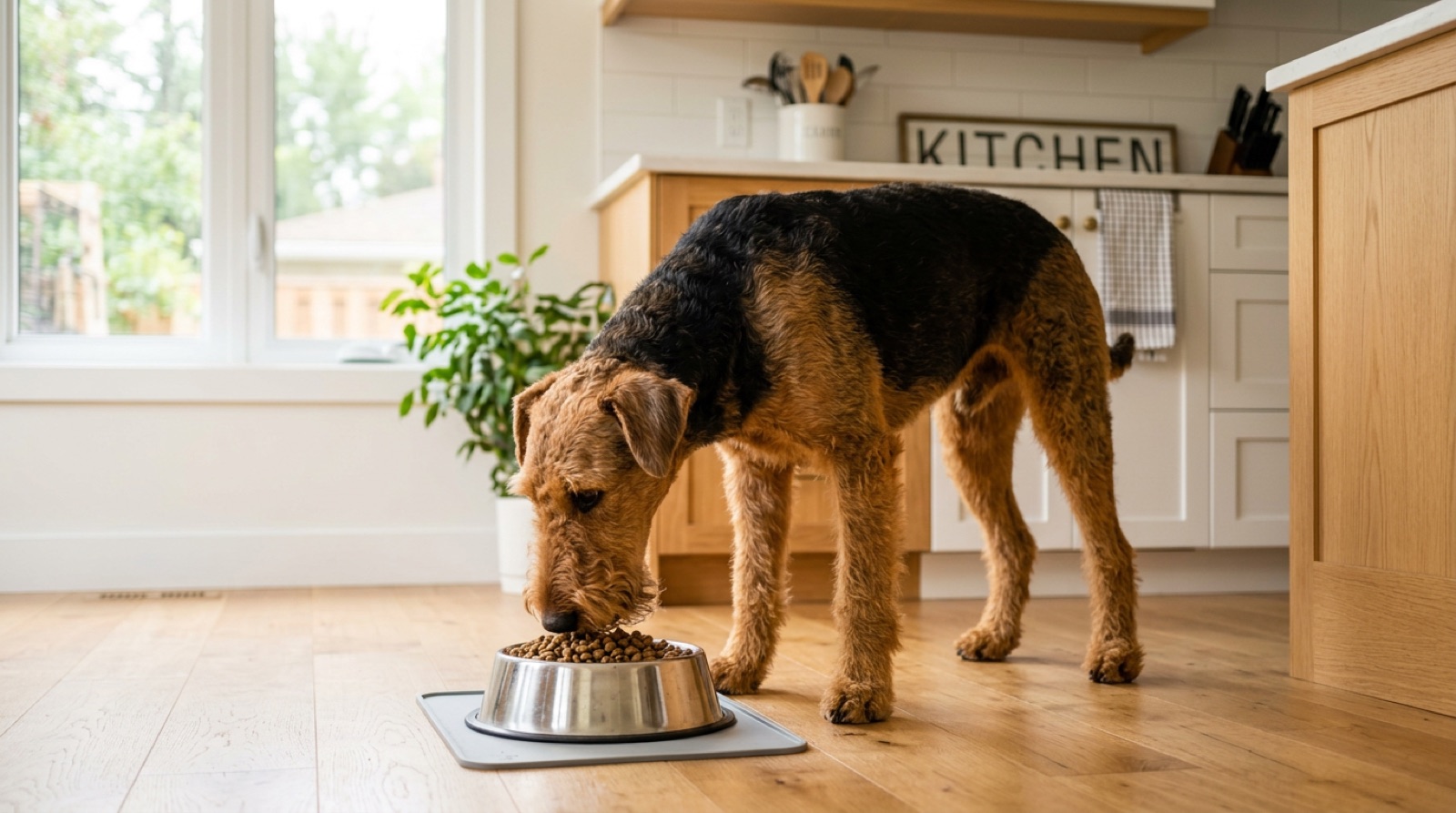
Why Airedales end up needing a new home
The Canadian Kennel Club notes the breed is "dubbed 'King of the Terriers'" and "maintains a steady disposition as befits nobility." The steady disposition is real in adults. The surrenders mostly happen before it arrives. The recurring reasons owners reach the rehoming decision:
- Adolescence in a big body. Every terrier tests boundaries; an Airedale does it at fifty-plus pounds. Jumping, mouthing, leash-pulling, and selective hearing that would be an annoyance in a Westie can knock over a child or drag an adult, and households without training experience hit the wall between roughly eight months and two years.
- The stubborn-clever combination. Airedales learn fast and comply selectively. Owners expecting retriever-style eagerness read the independence as defiance and run out of patience.
- The grooming bill. The wiry coat needs regular professional clipping or hand-stripping, forever, and on a dog this size the cost is real and permanent.
- Terrier equipment at scale. Prey drive, digging, and scrappiness with same-sex dogs are standard terrier traits, and at Airedale size they carry more consequence.
- Space and strength mismatches. A bored, under-exercised Airedale in a small home is a lot of dog with nowhere to put itself.
None of this means your dog is broken. Most of it means a working breed hit its hardest season in a household that did not know the season was coming, and that is exactly the mismatch a thoughtful rehoming, or sometimes a training push, fixes.
The screening priorities unique to Airedales
Airedale applicants are rarer than small-terrier applicants, which makes each screen count double.
1. Size tolerance plus training commitment, together. Plenty of applicants can handle a big dog; fewer can handle a big terrier. Ask what dogs the applicant has owned and trained, and what they would do the first time the dog blows off a recall or guards a stolen shoe. The right answers involve patience, structure, and a sense of humour about terrier independence. Previous Airedale or large-terrier experience is the strongest signal you will get. An applicant who expects retriever biddability in an Airedale body is the mismatch that created your listing.
2. The household physics. Ask about children's ages, frail household members, and resident dogs, especially same-sex ones. An exuberant adolescent Airedale and a toddler, or a scrappy male and another dominant male, are combinations that fail predictably. A secure fence and a real exercise plan round out the check; this is a working dog, not a yard ornament.
How long it realistically takes
Slower to start, stronger to finish. Fewer people search for Airedales than for common breeds, so applications trickle rather than flood, but adult Airedales almost never come up for adoption in Canada and breed-savvy adopters are motivated when one does. Expect a few weeks to a couple of months for the right screened home. Put the breed name prominently in the listing so searchers find it, get the dog groomed before photographing it (a tidy Airedale outline is the breed's best advertisement), and do not let a quiet first week push you toward the fast wrong applicant. It is also worth telling your dog's breeder if you have one; reputable Airedale breeders often take their dogs back or know a waiting home.
What you must disclose
Airedale disclosure is behavioural plus upkeep, and on a dog this size the behavioural part is a safety document.
- Strength and manners, honestly. Jumping, mouthing, leash-pulling, and door-bolting, described as they are today, not as they were after the last good training week. The new home needs to know what it is physically taking on.
- Behaviour with other dogs. Especially same-sex, including any scuffles with circumstances. Terrier scrappiness at this size needs an informed home.
- Prey drive and cats. What your dog chases and whether it has lived with small animals.
- Training history. What has been trained, what worked, what stalled, and any tools or routines the dog knows. The new home builds on what you hand over.
- The coat routine. Groomer, schedule, cost, and how the dog tolerates handling. On an Airedale this is a permanent line item the applicant must budget for.
- Vet records, complete. Anything the vet has flagged, in full, with the vet's name.
Airedale Terrier rescues and where to ask
Airedale-specific rescue in Canada is a small volunteer network rather than a large organization, so contact them early and list on LocalPetFinder in parallel rather than waiting on a single door. One verified option:
Should you charge a rehoming fee?
Charge a real rehoming fee. A fee of a few hundred dollars for a healthy adult is normal in Canada (this is a directional range, not a fixed rule), paired with a vet reference and a meeting at your home or theirs. Airedales are an uncommon, expensive breed from breeders, and a free listing for a distinctive dog attracts the wrong kind of attention. The fee, the honest adolescence description, and the grooming-cost paragraph together filter the pool down to the training-committed homes worth talking to. You can donate the fee to a terrier rescue afterward if you would rather not keep it.
How LocalPetFinder rehoming works
- Submit a free listing at /rehome/submit. Photos, age, breed, spay or neuter status, compatibility, an honest behavioural profile, your reason for rehoming, and a fee. The form takes about 5 minutes and your dog never leaves your home.
- We review it for completeness and basic safety, usually within 24 to 48 hours, then it goes live.
- Your Airedale Terrier appears alongside rescue dogs on the Airedale Terrier listings and the main adoption pages, marked “Owner Rehoming.” Your email stays private.
- You screen and choose. Vetted adopters reach you through a verified contact form. You decide who to respond to, who to meet, and who gets the dog.
Ready to rehome your Airedale Terrier responsibly?
List your Airedale Terrier on LocalPetFinder for free. Your listing appears next to rescue dogs, you control the screening, and we never share your email publicly.
Start Your Free Listing →Anti-scam rules (read every line)
- Never list as “free to good home.” A fair fee is the single best filter against flippers and bad-faith adopters.
- Insist on a meet-and-greet, ideally at the adopter's home. Anyone who refuses a home check is hiding their living situation.
- Be suspicious of anyone offering more than your fee, or pushing for a fast, no-questions handover.
- Get a written agreement and a vet reference, transfer the microchip registration, and prefer e-transfer over cash for a paper trail.