The short answer
Rehome your dog on LocalPetFinder, free
List your dog at no cost. They stay home until the right family is found, you screen adopters through a verified contact form, and you choose who adopts. Reviewed within 24 to 48 hours.
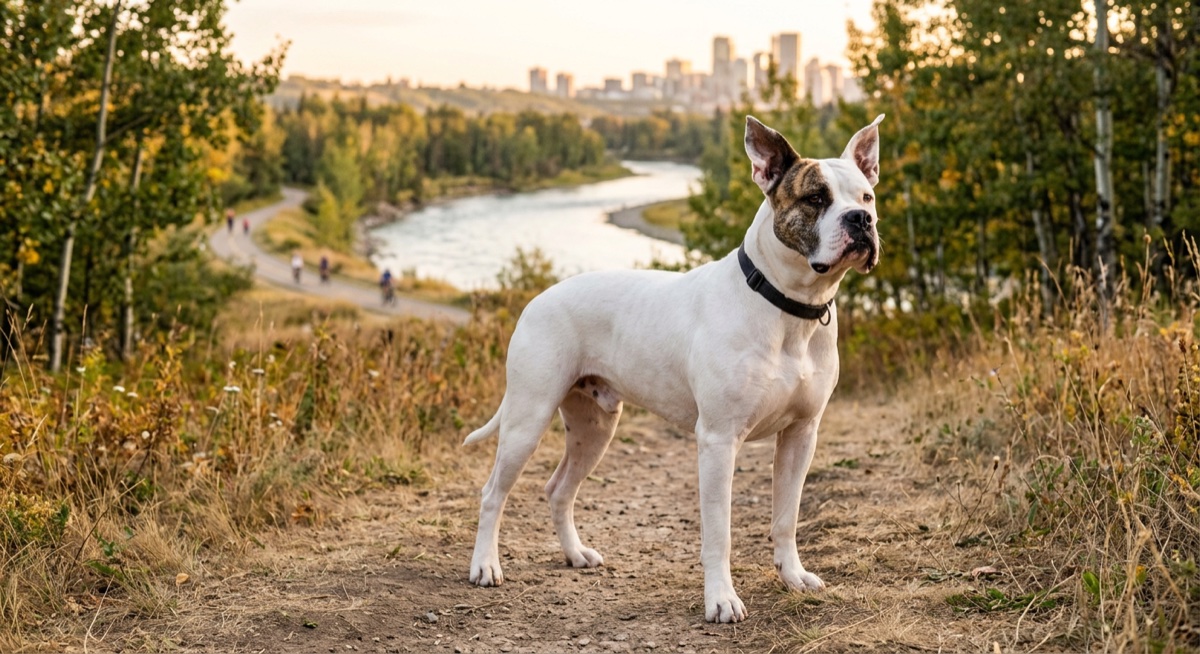
Why American Bulldogs end up needing a new home
The American Kennel Club describes the American Bulldog as a "well-balanced athletic dog" demonstrating "great strength, endurance, agility," a breed "bred to be a utility dog used for working the farm." That sentence is the whole story: this is a working athlete, not an oversized couch Bulldog. The recurring reasons owners reach the rehoming decision:
- The English Bulldog expectation. Families buy the name and expect a placid, low-exercise companion. What arrives is sixty to a hundred pounds of farm athlete that needs daily work, and the household is under-equipped within a year.
- Housing and insurance lists. Many landlord, condo, and insurer breed lists include the American Bulldog outright, and look-alike clauses can capture the breed even where it is not named. A lease change or a move can leave a responsible owner with no legal way to keep the dog.
- Adolescent strength without training. Jumping, leash-pulling, and boundary-testing in a dog this powerful can knock over a child or drag an adult, and households without big-dog experience hit a wall between roughly eight months and two years.
- Exercise needs unmet. A bored, under-worked American Bulldog is destructive on a scale a small breed cannot manage.
- Dog-to-dog selectivity. Common in the breed, especially same-sex, and a multi-dog mismatch wears a household down.
None of this means your dog is broken. It means a working breed landed in a household that was expecting a different dog, and a careful rehoming fixes exactly that mismatch.
The screening priorities unique to American Bulldogs
American Bulldog screening is a two-gate check, and an applicant has to pass both.
1. An active home that wants the working athlete. Ask what a typical day looks like and what dogs the applicant has owned and trained. The right answers involve daily vigorous exercise, training structure, a secure fence, and previous large-breed or working-breed experience. An applicant describing quiet evenings with a bigger version of an English Bulldog is the exact mismatch that created your listing, and saying so kindly saves everyone the failed placement.
2. Housing that can legally and practically keep the breed, verified in writing. Before handover, confirm the adopter's lease or condo rules permit the dog (ask to see the clause, not just a verbal yes), their insurance will not refuse them over it, and their municipality does not restrict bully-type breeds. This is the same three-part framework we lay out in our pit bull rehoming guide, and because so many restricted lists sweep in the American Bulldog, it applies here almost unchanged. A placement into housing that cannot keep the dog is just a slower surrender.
How long it realistically takes
Plan for several weeks to a couple of months. Big, strong, restricted-list breeds draw a narrower applicant pool than their friendliness deserves, because the housing check removes a large share of otherwise good homes. Start the moment rehoming becomes likely, not the week before a move. Name the breed accurately in the listing, lead the photos with the dog looking relaxed and handled, and be specific about exercise needs so the active homes self-select in. If the search stalls, do not lower the screening; widen the channels, tell your vet clinic and any trainers you have used, and read our guide on what to do if you can't find an adopter.
What you must disclose
On a dog this size, honest disclosure is a safety document.
- Strength and manners, honestly. Jumping, mouthing, leash-pulling, and door habits, described as they are today. The new home needs to know what it is physically taking on.
- Behaviour with other dogs. Especially same-sex, including any scuffles with circumstances. Selectivity is common and manageable in an informed home.
- Behaviour with children and cats. What is actually true of your dog, with ages and context.
- The housing context. Tell the adopter plainly that the breed lands on restricted and look-alike lists so they verify their own lease, insurance, and bylaw before committing.
- Training history. What has been trained, what worked, what stalled, and the routines the dog knows.
- Vet records, complete. Skin allergies and joint flags are worth an informed conversation; hand over everything with the vet's name.
American Bulldog rescues and where to ask
There is no American Bulldog-specific rescue based in Canada. The breed is served by bully-breed rescues and by all-breed rescues with big-dog fosters; the verified bully-breed organizations listed in our pit bull rehoming guide are the right doors to knock on, with the caveat that you should confirm an American Bulldog fits each rescue's intake mandate. Contact them early and list on LocalPetFinder in parallel rather than waiting on a single door.
Should you charge a rehoming fee?
Charge a rehoming fee. For a healthy adult American Bulldog a few hundred dollars is normal in Canada (this is a directional range, not a fixed rule), paired with a vet reference and a meeting at your home or theirs. The fee does real protective work for a powerful bully-type breed: free listings attract people who want these dogs for breeding, guarding, or worse, and a meaningful fee plus honest screening filters them out. You can donate the fee to a bully-breed rescue afterward if you would rather not keep it.
How LocalPetFinder rehoming works
- Submit a free listing at /rehome/submit. Photos, age, breed, spay or neuter status, compatibility, an honest behavioural profile, your reason for rehoming, and a fee. The form takes about 5 minutes and your dog never leaves your home.
- We review it for completeness and basic safety, usually within 24 to 48 hours, then it goes live.
- Your American Bulldog appears alongside rescue dogs on the American Bulldog listings and the main adoption pages, marked “Owner Rehoming.” Your email stays private.
- You screen and choose. Vetted adopters reach you through a verified contact form. You decide who to respond to, who to meet, and who gets the dog.
Ready to rehome your American Bulldog responsibly?
List your American Bulldog on LocalPetFinder for free. Your listing appears next to rescue dogs, you control the screening, and we never share your email publicly.
Start Your Free Listing →Anti-scam rules (read every line)
- Never list as “free to good home.” A fair fee is the single best filter against flippers and bad-faith adopters.
- Insist on a meet-and-greet, ideally at the adopter's home. Anyone who refuses a home check is hiding their living situation.
- Be suspicious of anyone offering more than your fee, or pushing for a fast, no-questions handover.
- Get a written agreement and a vet reference, transfer the microchip registration, and prefer e-transfer over cash for a paper trail.