The short answer
Rehome your dog on LocalPetFinder, free
List your dog at no cost. They stay home until the right family is found, you screen adopters through a verified contact form, and you choose who adopts. Reviewed within 24 to 48 hours.
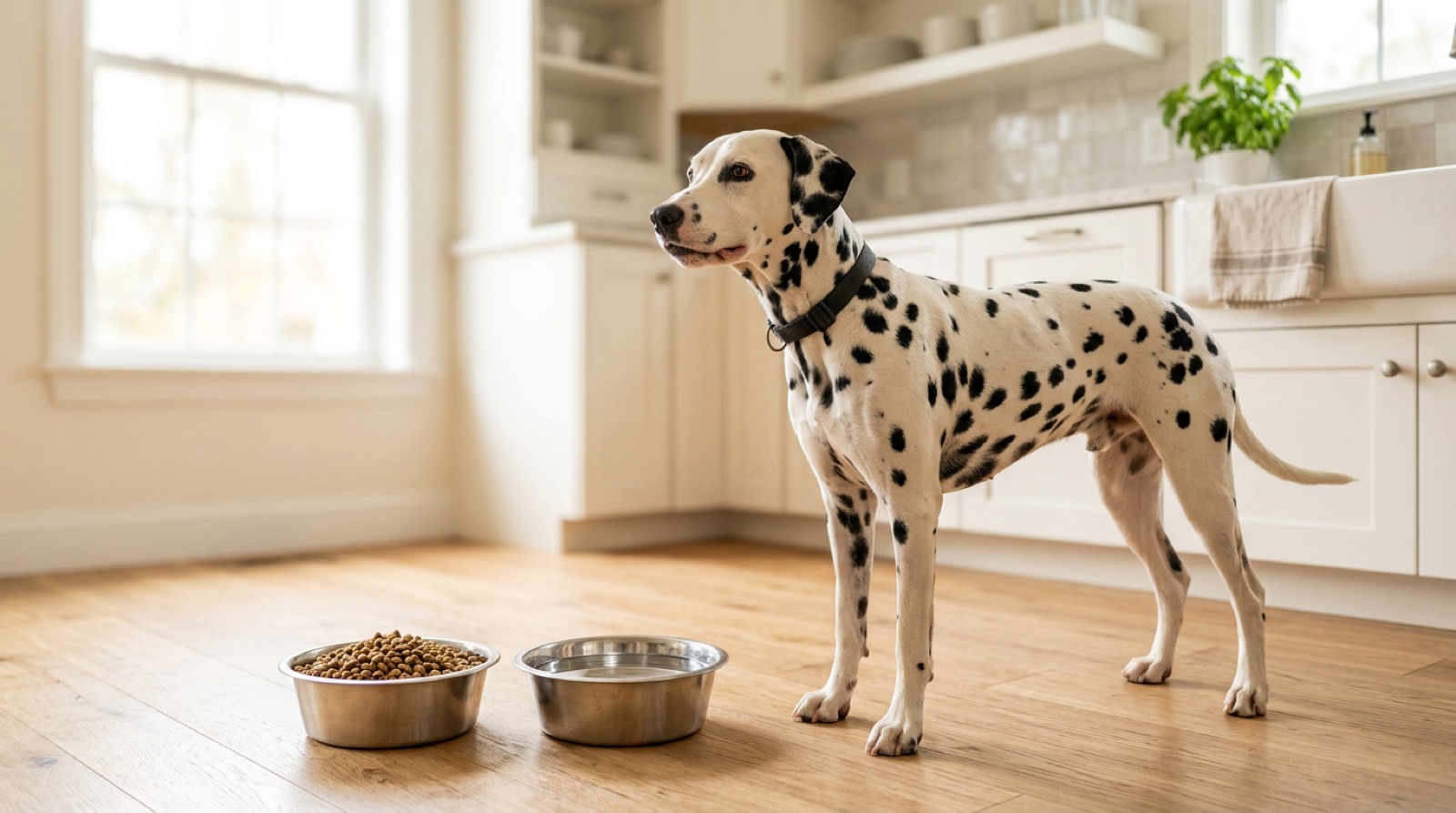
Why Dalmatians end up needing a new home
The Canadian Kennel Club calls the Dal "stable, outgoing and dignified," notes its "capacity to travel great distances at a steady pace," and says the breed needs "lots of safe running room and regular outdoor exercise." The surrenders live in the second half of that sentence. The recurring reasons:
- Bought on the spots. The defining Dalmatian pattern, repeated with every movie re-release. The look sells a decorative family dog; the dog underneath is a tireless coach hound, and a household that walks twenty minutes a day gets the bored, destructive, mouthing version of the breed.
- The energy itself. Even well-intentioned active families underestimate an endurance breed. A Dal that does not get real mileage invents projects, and the projects end up in the listing.
- Hearing discovered late. Congenital deafness occurs in the breed, in one ear or both, and some owners only piece it together after months of "stubbornness" that was actually a dog that could not hear them. A deaf or partially deaf Dal is entirely liveable with the right handling, but the discovery destabilizes unprepared households.
- Urinary trouble. Dalmatians metabolize purines differently from other breeds, which predisposes some dogs to urinary stones, vet bills, and a lifelong diet-and-water routine. The costs and the management surprise owners who bought a dog, not a protocol.
- The shedding. Short coat, year-round volume, and white hairs woven into everything you own.
None of this means your dog is broken. It means the most famously miscast breed in dogdom was miscast again, and a careful rehoming to a running home fixes exactly that.
The screening priorities unique to Dalmatians
Dalmatian screening is about mileage first and medical continuity second.
1. A genuinely running home. Ask what the applicant's exercise week actually looks like, in kilometres and hours rather than adjectives. Runners, hikers, cyclists who canicross or bikejor, and horse people (the breed's oldest partnership) are the natural fit. An applicant whose plan is a fenced yard and two walks has just described the household your dog is leaving. This single question filters the pool better than any other.
2. Hearing-aware matching. If your dog is deaf or partially deaf, say so plainly and screen for a home that understands the handling: hand signals, vibration cues, a securely fenced yard, and no off-leash anywhere unfenced, because a dog that cannot hear you cannot be recalled. Deaf-dog-experienced adopters exist and do beautifully with Dals. If your dog has never been tested and you are unsure, describe what you observe honestly and suggest the new home discuss BAER testing with their vet rather than guessing.
3. Diet-and-water continuity. If your dog has any stone or urinary history, the vet-guided diet and water routine travels with the dog, and the adopter needs to commit to keeping it up before handover. Ask directly whether they are prepared for a breed with a lifelong feeding consideration and the vet relationship that goes with it.
What you must disclose
Dalmatian disclosure is half behavioural, half medical, and the medical half is what most listings leave out.
- Hearing status, honestly. BAER results if the dog was tested; your honest observations if not (which side the dog responds from, what it sleeps through, whether it startles when approached). Never let a new home discover deafness on their own.
- Urinary and diet history. Any stones, blockages, or crystals, the vet records that go with them, the current food and water routine, and the vet's name. Tell the new home to keep the routine going and confirm changes with their own vet rather than improvising.
- The energy reality. What exercise your dog actually gets, what happens when it gets less, and any destructive history from under-exercised stretches.
- Behaviour with children, dogs, and cats. From history, not from the family-movie reputation.
- Startle handling if hearing is reduced. How your dog likes to be woken and approached, so nobody learns by surprise.
- The shedding. Year-round and legendary. The right adopter laughs; the wrong one returns the dog.
Dalmatian rescues and where to ask
Dalmatian-specific rescue in Canada is small and intermittent; regional volunteer efforts come and go, and most Canadian Dals move through all-breed rescues. Ask your breeder first if your dog came from one (responsible breeders take their dogs back, and the breed's own club foundations urge exactly that), contact all-breed rescues in your region, and list on LocalPetFinder in parallel rather than waiting on a single door.
Should you charge a rehoming fee?
Charge a rehoming fee. A few hundred dollars for a healthy adult Dalmatian is normal in Canada (this is a directional range, not a fixed rule), paired with a vet reference and a meeting at your home or theirs. Every movie cycle proves how much impulse demand the spots generate, and a real fee plus an honest energy paragraph filters the impulse out. Donate it to a rescue afterward if you would rather not keep it.
How LocalPetFinder rehoming works
- Submit a free listing at /rehome/submit. Photos, age, breed, spay or neuter status, compatibility, an honest behavioural profile, your reason for rehoming, and a fee. The form takes about 5 minutes and your dog never leaves your home.
- We review it for completeness and basic safety, usually within 24 to 48 hours, then it goes live.
- Your Dalmatian appears alongside rescue dogs on the Dalmatian listings and the main adoption pages, marked “Owner Rehoming.” Your email stays private.
- You screen and choose. Vetted adopters reach you through a verified contact form. You decide who to respond to, who to meet, and who gets the dog.
Ready to rehome your Dalmatian responsibly?
List your Dalmatian on LocalPetFinder for free. Your listing appears next to rescue dogs, you control the screening, and we never share your email publicly.
Start Your Free Listing →Anti-scam rules (read every line)
- Never list as “free to good home.” A fair fee is the single best filter against flippers and bad-faith adopters.
- Insist on a meet-and-greet, ideally at the adopter's home. Anyone who refuses a home check is hiding their living situation.
- Be suspicious of anyone offering more than your fee, or pushing for a fast, no-questions handover.
- Get a written agreement and a vet reference, transfer the microchip registration, and prefer e-transfer over cash for a paper trail.