The short answer
Rehome your dog on LocalPetFinder, free
List your dog at no cost. They stay home until the right family is found, you screen adopters through a verified contact form, and you choose who adopts. Reviewed within 24 to 48 hours.
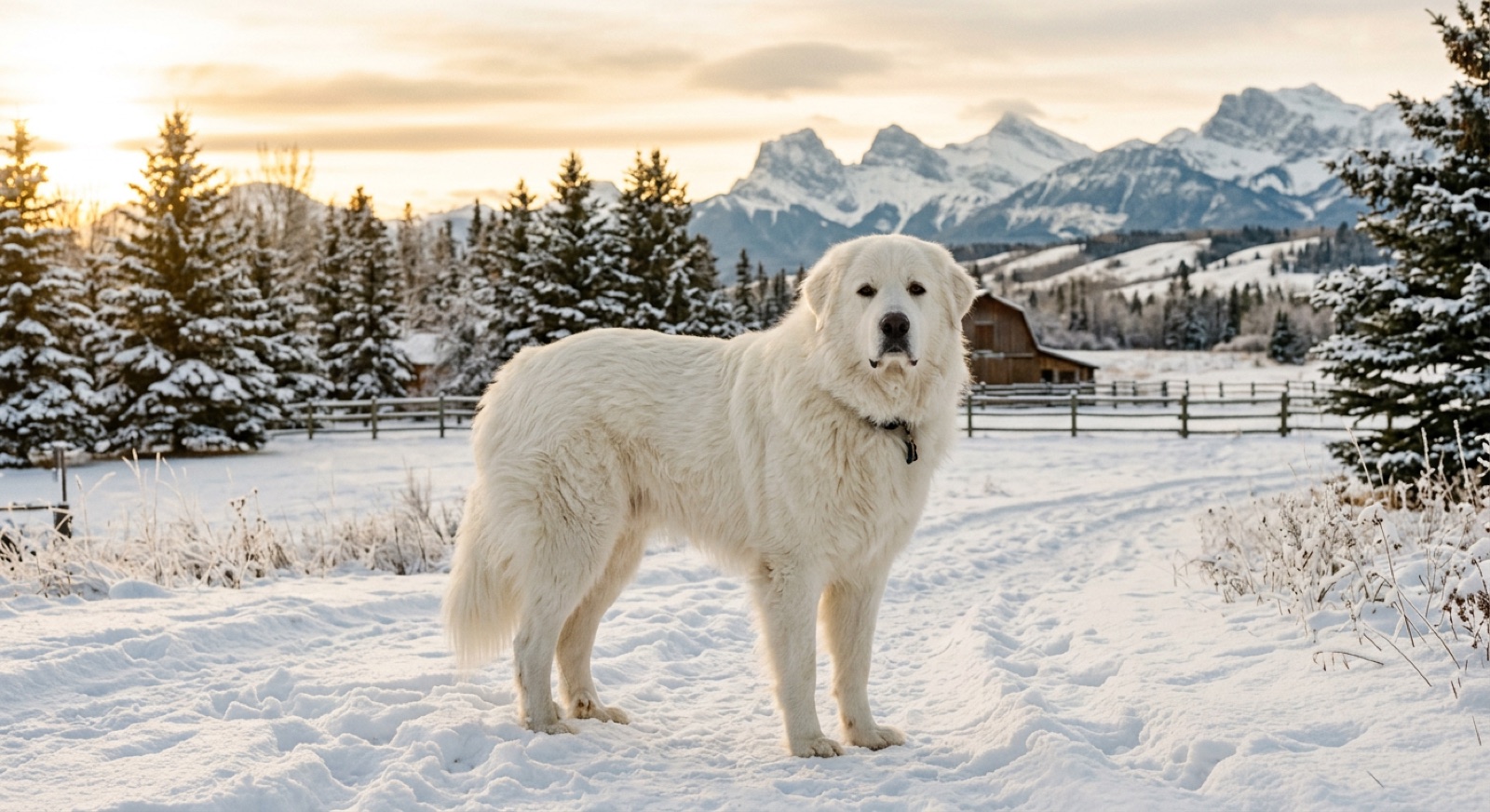
Why Great Pyrenees end up needing a new home
The Canadian Kennel Club describes the Great Pyrenees as "gentle and docile with those it knows," and with family the breed is exactly that. The surrenders come from the other half of the job description. For centuries the Pyr guarded flocks alone in the mountains, deciding for itself what was a threat and announcing it loudly. Those instincts did not go anywhere. The recurring reasons:
- The barking, in a neighbourhood. The single biggest driver. Nocturnal, resonant, and functional: the Pyr is warning off everything it hears, which in a subdivision is everything. Bylaw complaints and furious neighbours end more Pyr placements than any behaviour problem.
- Escaping and roaming. A guardian patrols territory, and a Pyr decides how big the territory is. They climb, dig, lean through, and open things, and once out they travel with purpose. A fence that holds other dogs often will not hold a Pyr.
- The farm dog that did not work out. Some Pyrs are surrendered from acreages when a livestock-guardian placement fails, the flock is sold, or the farm changes hands. A working-raised dog needs an honest description of what it knows and does not know about living indoors.
- Independence mistaken for stubbornness. The breed was bred to work without instruction. Recall is unreliable for life, obedience is negotiated, and households expecting retriever biddability read it as defiance.
- The coat and the scale. A heavy double coat that mats without weekly work, seasonal shedding at volume, and giant-breed food and vet costs.
None of this means your dog is broken. It means a working guardian landed in a setting that punishes the exact traits it was bred for, and a careful rehoming to the right setting fixes that completely.
The screening priorities unique to Great Pyrenees
Pyr screening is about the setting far more than the applicant's dog experience.
1. Honest bark tolerance. Ask where the applicant lives and what is around them. The right answers are rural properties, acreages, or detached homes with distance and genuinely unbothered neighbours; the wrong answer is a townhouse and optimism. Say plainly in the listing that the dog barks at night because that is the job, and let the setting self-select. A placement that hides the barking fails on the first bylaw complaint, and the dog moves again.
2. A fence the dog has not already beaten, and no off-leash plans. Describe exactly how your dog tests containment (climbing, digging, gate-opening) so the new home can secure against it before arrival, and be clear that a Pyr is a leash-and-fence dog for life: its independence means recall can never be trusted near roads. An applicant who talks about off-leash hikes has not researched the breed.
3. If your dog is a working livestock guardian, say so. A barn-raised Pyr that has lived with stock is a different placement from a house companion, and the kindest match is often another working home. Describe what stock the dog has worked, how it is with people handling, and whether it has ever lived indoors. Working-home placements are exactly what breed rescues are practised at matching, so lean on them for this case.
What you must disclose
Pyr disclosure is about the traits the wrong home would call problems and the right home calls Tuesday.
- The barking pattern, honestly. When, how much, and what the neighbours have said. This is the disclosure that decides whether the placement lasts.
- Every escape, with method. Climbed, dug, opened, or bolted, so the new home secures against your dog's actual technique.
- Working history, if any. Stock experience, barn living, and how much indoor life the dog has had.
- Behaviour with children, dogs, cats, and poultry. Guardian gentleness with family is typical, but describe your dog, and be specific about small animals.
- The coat's condition and routine. Current matting if any, and the weekly brushing that keeps a double coat healthy.
- Vet records, complete. Joint flags matter in a giant breed; hand over everything with the vet's name.
Great Pyrenees rescues and where to ask
Great Pyrenees rescue in Canada is regional and volunteer-run, and Pyr-experienced rescues are practised at exactly the suburban-mismatch and working-dog placements this breed generates. Contact them early and list on LocalPetFinder in parallel. One verified option:
Should you charge a rehoming fee?
Charge a rehoming fee. A few hundred dollars for a healthy adult Pyr is normal in Canada (this is a directional range, not a fixed rule), paired with a vet reference and a meeting at your home or theirs. For this breed the fee does double duty: it filters out impulse applicants who fell for the majestic white photo without reading the barking paragraph, and it slows down farm buyers looking for a free guardian to leave in a field without care. If your dog is going to a working home, screen the care standard (shelter, vet history of their current animals) as carefully as a house placement. Donate the fee to a Pyr rescue afterward if you would rather not keep it.
How LocalPetFinder rehoming works
- Submit a free listing at /rehome/submit. Photos, age, breed, spay or neuter status, compatibility, an honest behavioural profile, your reason for rehoming, and a fee. The form takes about 5 minutes and your dog never leaves your home.
- We review it for completeness and basic safety, usually within 24 to 48 hours, then it goes live.
- Your Great Pyrenees appears alongside rescue dogs on the Great Pyrenees listings and the main adoption pages, marked “Owner Rehoming.” Your email stays private.
- You screen and choose. Vetted adopters reach you through a verified contact form. You decide who to respond to, who to meet, and who gets the dog.
Ready to rehome your Great Pyrenees responsibly?
List your Great Pyrenees on LocalPetFinder for free. Your listing appears next to rescue dogs, you control the screening, and we never share your email publicly.
Start Your Free Listing →Anti-scam rules (read every line)
- Never list as “free to good home.” A fair fee is the single best filter against flippers and bad-faith adopters.
- Insist on a meet-and-greet, ideally at the adopter's home. Anyone who refuses a home check is hiding their living situation.
- Be suspicious of anyone offering more than your fee, or pushing for a fast, no-questions handover.
- Get a written agreement and a vet reference, transfer the microchip registration, and prefer e-transfer over cash for a paper trail.