The short answer
Rehome your dog on LocalPetFinder, free
List your dog at no cost. They stay home until the right family is found, you screen adopters through a verified contact form, and you choose who adopts. Reviewed within 24 to 48 hours.
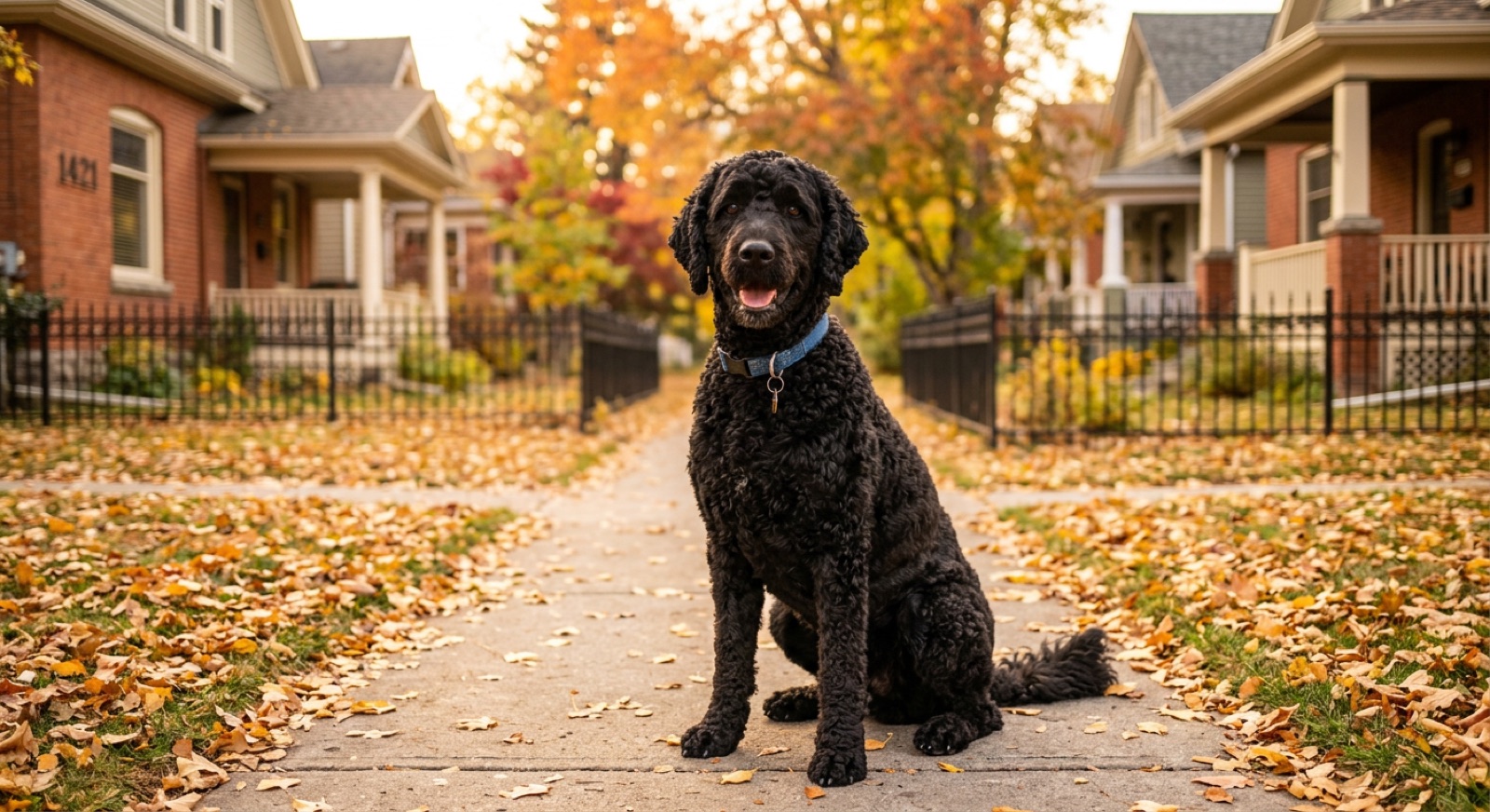
Why Portuguese Water Dogs end up needing a new home
The Canadian Kennel Club describes a robust, spirited working dog bred to work Portuguese fishing boats: swimming, retrieving, and thinking for itself all day. The recurring surrender reasons:
- The hypoallergenic promise breaking. The most PWD-specific pattern. The breed is marketed as allergy-friendly because it has a low-shedding coat, and the honest version is narrower: no dog is truly hypoallergenic, because reactions are driven by dander, saliva, and urine proteins rather than shed hair alone. Some allergic households do fine with a PWD; others react anyway and discover it months in.
- The grooming bill nobody budgeted. That low-shedding coat grows continuously and mats without regular brushing and professional grooming every several weeks, at real cost, for the life of the dog. Grooming arrears are a steady driver of PWD listings.
- A working dog under-worked. PWDs are athletic, clever, and busy. Without daily exercise, swimming, and mental work, they invent jobs: chewing, counter-surfing, mouthing, and general adolescent chaos that peaks in the first two years.
- More dog than the puppy suggested. A bouncy, mouthy, fifty-pound adolescent with boat-dog energy surprises households that bought the curly teddy-bear puppy.
- Ordinary life changes. Divorce, moves, schedules. Rare breeds are not exempt; they just have better safety nets.
None of this means your dog is broken. It means a working water dog needs a home that signed up for the coat and the engine, and for this breed those homes are actively waiting.
Breeder first, club rescue second: the rare-breed order of operations
For most breeds, a screened private rehoming is the default path. For a PWD, work the list in order.
1. Call your breeder, even years later. PWDCC member breeders are obliged to take back or help place dogs of their breeding, and the club's rescue policy puts costs on breeders who decline. A reputable breeder would far rather get your call than find their dog on a classifieds site. Dig out the contract; many spell out exactly this situation.
2. Contact PWDCC Rescue. The club runs a national rescue with regional coordinators covering Central and Eastern Canada, the Prairies, and the West. Dogs are vetted, spayed or neutered, and placed by suitability against a waiting list of screened PWD-experienced applicants. For a rare breed, that waiting list is the single biggest advantage rescue has over a cold listing.
3. List on LocalPetFinder in parallel. Club intake takes time and capacity is volunteer-limited, so a screened listing keeps a second path open while the dog stays home with you. Screen applicants the way the club would: grooming commitment stated as a routine, real daily exercise, and PWD or poodle-type experience preferred.
What you must disclose
PWD disclosure is coat, energy, and mouth, told completely.
- The real grooming routine and cost. Brushing frequency, professional grooming schedule, and the coat's current condition, including any matting. This is the commitment that breaks PWD placements when it is soft-pedalled.
- Why you are rehoming, plainly. If it is allergies, say so; it reassures adopters the dog is not the problem. If it is the workload, say that too, because the right home wants the workload.
- Energy and mouthiness. What a settled day takes, what an under-exercised week looks like, and any adolescent mouthing or chewing history. PWD-experienced homes expect it; first-time homes need to hear it.
- Alone-time behaviour. This is a people-attached working breed; describe what an empty-house day actually looks like.
- Behaviour with children, dogs, and cats, from history. A bouncy water dog and a toddler is a supervision question the new home should hear about honestly.
- Vet records and breeder paperwork, complete. Health clearances travel with the dog in this breed's community, and having them ready marks your listing as serious.
Portuguese Water Dog rescues and where to ask
PWD rescue in Canada runs through the national breed club, which maintains regional coordinators and a screened waiting list of adopters. Contact them early and honestly, and list on LocalPetFinder in parallel. One verified option:
Should you charge a rehoming fee?
Charge a rehoming fee. For a healthy adult PWD a few hundred dollars is normal in Canada (this is a directional range, not a fixed rule), and for this breed it is doing double duty: PWDs are rare and sought-after, which attracts both impulse applicants and the occasional reseller, and a real fee plus a vet reference filters both. If the dog goes through PWDCC Rescue instead, the club handles the donation structure. Donate a private fee to the club rescue afterward if you would rather not keep it.
How LocalPetFinder rehoming works
- Submit a free listing at /rehome/submit. Photos, age, breed, spay or neuter status, compatibility, an honest behavioural profile, your reason for rehoming, and a fee. The form takes about 5 minutes and your dog never leaves your home.
- We review it for completeness and basic safety, usually within 24 to 48 hours, then it goes live.
- Your Portuguese Water Dog appears alongside rescue dogs on the Portuguese Water Dog listings and the main adoption pages, marked “Owner Rehoming.” Your email stays private.
- You screen and choose. Vetted adopters reach you through a verified contact form. You decide who to respond to, who to meet, and who gets the dog.
Ready to rehome your Portuguese Water Dog responsibly?
List your Portuguese Water Dog on LocalPetFinder for free. Your listing appears next to rescue dogs, you control the screening, and we never share your email publicly.
Start Your Free Listing →Anti-scam rules (read every line)
- Never list as “free to good home.” A fair fee is the single best filter against flippers and bad-faith adopters.
- Insist on a meet-and-greet, ideally at the adopter's home. Anyone who refuses a home check is hiding their living situation.
- Be suspicious of anyone offering more than your fee, or pushing for a fast, no-questions handover.
- Get a written agreement and a vet reference, transfer the microchip registration, and prefer e-transfer over cash for a paper trail.