The short answer
Rehome your dog on LocalPetFinder, free
List your dog at no cost. They stay home until the right family is found, you screen adopters through a verified contact form, and you choose who adopts. Reviewed within 24 to 48 hours.
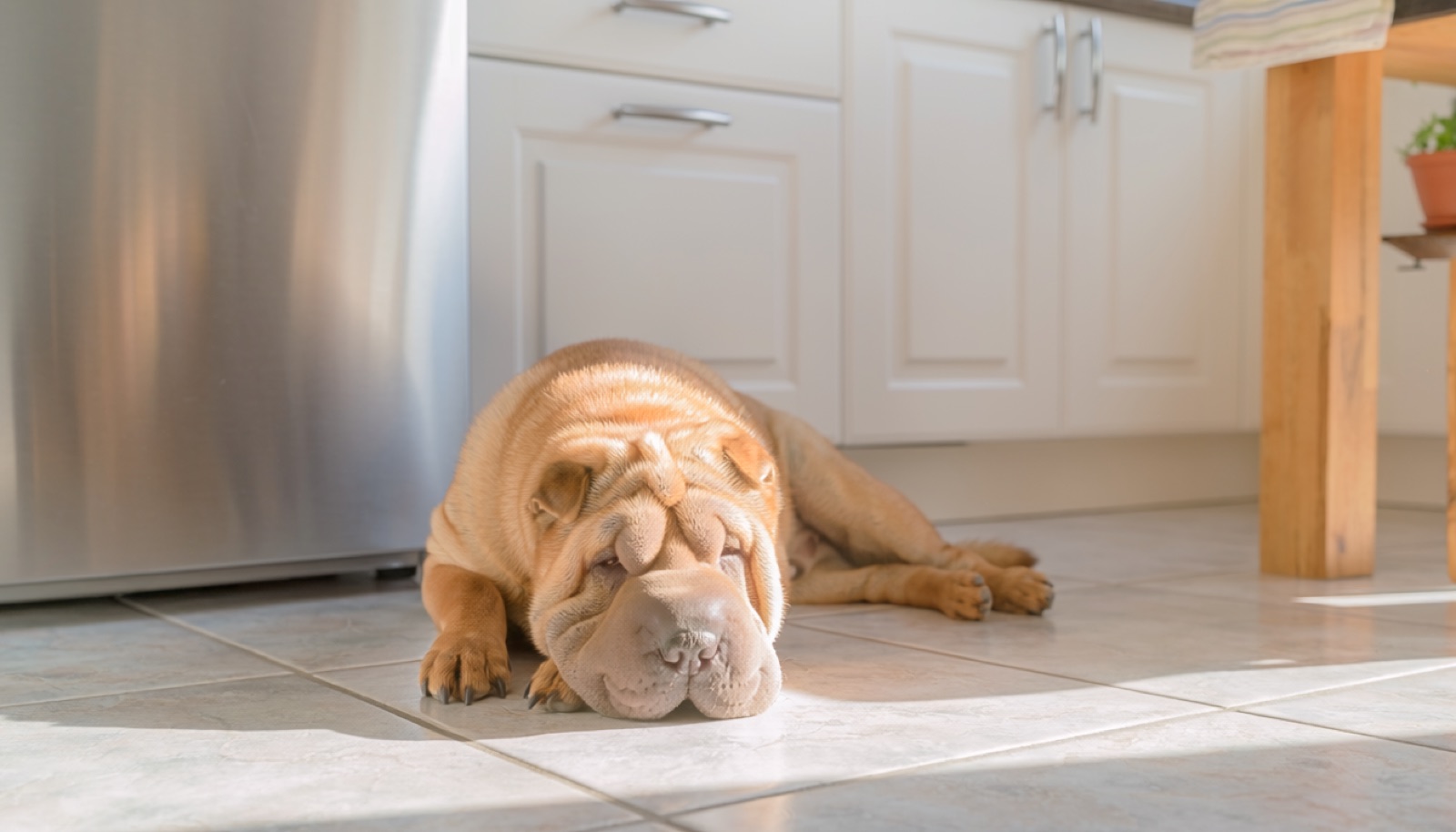
Why Chinese Shar-Pei end up needing a new home
The Canadian Kennel Club notes that "though intensely loyal to their owners, Shar-Pei are usually somewhat aloof with strangers and have a natural instinct to guard home and family." Temperament, though, is rarely why one gets rehomed. The recurring reasons:
- Vet costs that arrive with the breed. The dominant driver. Skin-fold infections that need ongoing care, entropion (an eyelid that rolls inward against the eye, commonly needing corrective surgery), ear problems bred into tight ear canals, allergies, and the episodic fevers many owners know as familial Shar-Pei fever. None of it is exotic to a Shar-Pei vet, and all of it costs money. A household that budgeted for a normal dog can be underwater within a year or two, and our financial-hardship guide exists for exactly that situation.
- The wrinkle purchase. Puppies bought on the look, by households that never learned the fold-care routine that keeps the look healthy. When the first skin infection arrives, so does the reality.
- Guarding instinct meeting an unprepared home. A Shar-Pei is a natural guard: aloof with strangers, watchful at the door, devoted to its own people. Households expecting instant sociability read normal reserve as a problem.
- Housing and insurance friction. Shar-Pei appear on some landlord and insurer restricted lists, and a lease change can force the decision.
- Dog selectivity. Many Shar-Pei are choosy with other dogs, and a multi-dog mismatch wears a household down.
None of this means your dog is a problem. It means a specialized breed landed in a budget or a household that could not carry it, and a careful rehoming to a prepared home fixes exactly that.
The screening priorities unique to Shar-Pei
Shar-Pei screening is a health-and-budget conversation, run honestly in both directions.
1. An adopter who reads the medical picture and applies anyway. Put the real health history in the listing: the fold-care routine, any eye surgery done or pending, ear care, allergy management, and what a typical vet year has cost you. The right adopter is often someone who has owned a Shar-Pei or a bulldog-adjacent breed before and knows what they are signing up for. The applicant who flinches at the health paragraph has screened themselves out early, which is the point. A financially stretched placement just relives your crisis at a new address.
2. A vet relationship, not just a budget. Ask whether the applicant has a regular vet and whether that clinic knows the breed. Shar-Pei do best with vets who see them regularly, and an adopter who already has that relationship is a strong signal. Share your own vet's name so records transfer cleanly.
3. Honest matching on the guard instinct. Describe your dog's line between family and strangers, and screen for a calmer household that wants a loyal, reserved companion rather than a social butterfly. Answer the other-dog and cat questions from history, not hope.
What you must disclose
Shar-Pei disclosure is a medical file first and a temperament note second. Completeness is what makes the placement stick.
- The skin, completely. The fold-care routine that works, any recurring infections, current medications or washes, and what the flare-ups look like.
- The eyes. Any entropion diagnosis, surgery done or recommended, and what the vet has said about the outlook. This is the single most common Shar-Pei disclosure and experienced adopters expect it.
- Ears, allergies, and fevers. Any episodes the vet has flagged, described plainly, with the records attached and the vet's name on them.
- The honest cost picture. What the last vet year actually cost. It narrows the pool to financially ready homes, which is exactly the narrowing you want.
- Behaviour with strangers, dogs, cats, and children. From history, including the door behaviour and how long warming up takes.
- Heat tolerance. A short-muzzled, heavy-set dog needs a summer routine; pass yours on.
Chinese Shar-Pei rescues and where to ask
Shar-Pei rescue in Canada is small but real, and the breed-experienced rescues are practised at exactly the health-driven surrenders this breed generates. Contact them early and list on LocalPetFinder in parallel. Two verified options:
Should you charge a rehoming fee?
Charge a rehoming fee for a healthy dog: a few hundred dollars is normal in Canada (this is a directional range, not a fixed rule), paired with a vet reference and a meeting at your home or theirs. For a Shar-Pei with active medical needs, weight the screening toward the financially ready home rather than the fee amount; a lower fee to a home with a proven vet relationship and an honest budget is a better trade than a higher fee to an unprepared one. Donate the fee to a Shar-Pei rescue afterward if you would rather not keep it.
How LocalPetFinder rehoming works
- Submit a free listing at /rehome/submit. Photos, age, breed, spay or neuter status, compatibility, an honest behavioural profile, your reason for rehoming, and a fee. The form takes about 5 minutes and your dog never leaves your home.
- We review it for completeness and basic safety, usually within 24 to 48 hours, then it goes live.
- Your Chinese Shar-Pei appears alongside rescue dogs on the Chinese Shar-Pei listings and the main adoption pages, marked “Owner Rehoming.” Your email stays private.
- You screen and choose. Vetted adopters reach you through a verified contact form. You decide who to respond to, who to meet, and who gets the dog.
Ready to rehome your Chinese Shar-Pei responsibly?
List your Chinese Shar-Pei on LocalPetFinder for free. Your listing appears next to rescue dogs, you control the screening, and we never share your email publicly.
Start Your Free Listing →Anti-scam rules (read every line)
- Never list as “free to good home.” A fair fee is the single best filter against flippers and bad-faith adopters.
- Insist on a meet-and-greet, ideally at the adopter's home. Anyone who refuses a home check is hiding their living situation.
- Be suspicious of anyone offering more than your fee, or pushing for a fast, no-questions handover.
- Get a written agreement and a vet reference, transfer the microchip registration, and prefer e-transfer over cash for a paper trail.