The short answer
Rehome your dog on LocalPetFinder, free
List your dog at no cost. They stay home until the right family is found, you screen adopters through a verified contact form, and you choose who adopts. Reviewed within 24 to 48 hours.
Why doodles end up needing a new home
The doodle boom sold two promises, and most doodle surrenders trace to one of them. Even the Goldendoodle Association of North America, the cross's own breed club, is built around education precisely because expectations run so far ahead of reality. The recurring reasons:
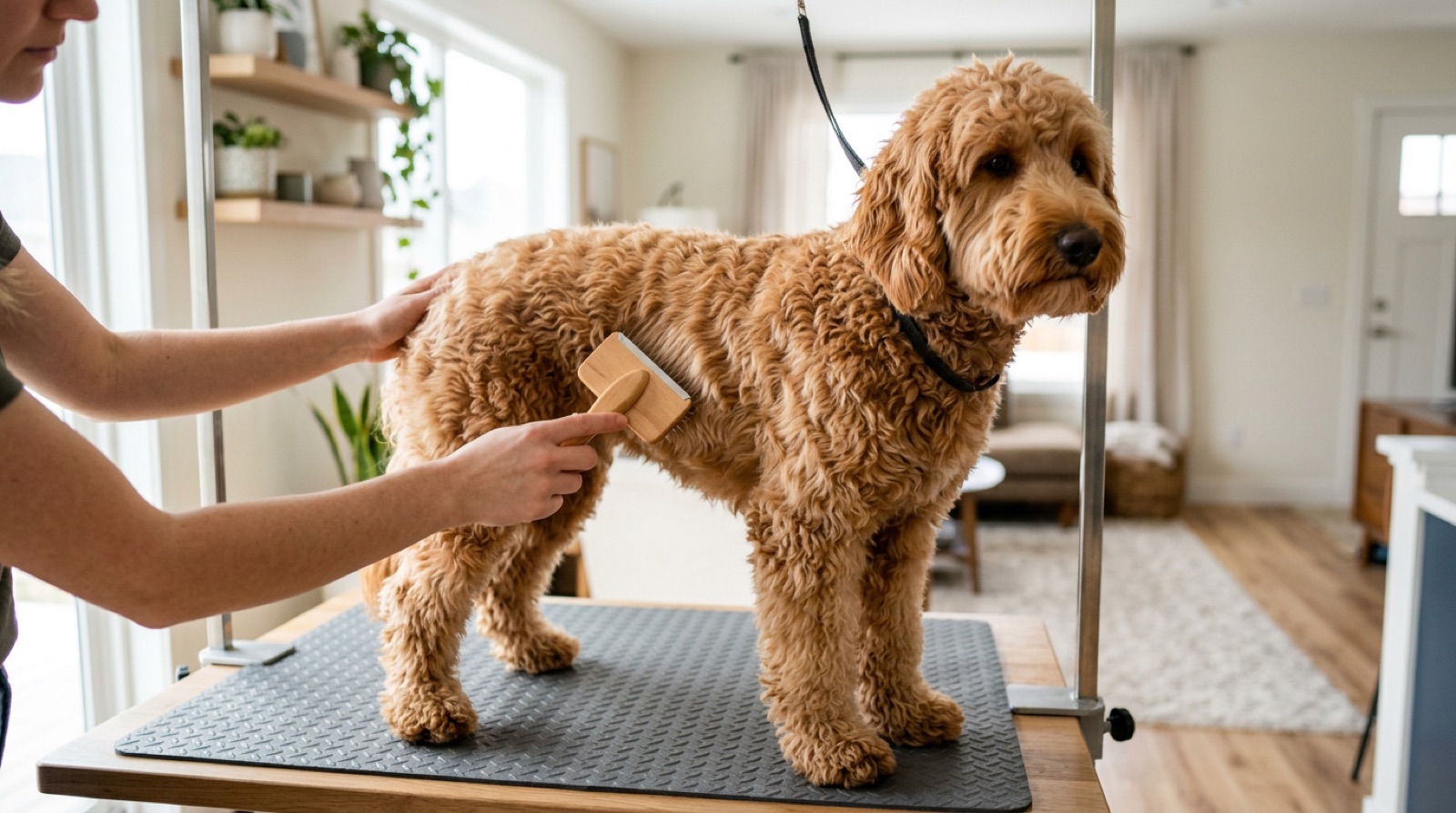
- The "low-maintenance" coat that is anything but. The biggest driver. A doodle's mixed coat commonly needs professional grooming on a standing schedule plus real brushing between appointments, and many doodle coats mat faster than a purebred Poodle's. Households that bought an easy dog meet a four-figure annual grooming reality, fall behind, and the matting spiral ends in a shave-down and a listing. Our Poodle rehoming guide covers the coat mechanics in full, and they apply to every doodle cross.
- The allergy promise failing. No dog is truly hypoallergenic, and doodle coats vary hugely even within one litter. A family bets on the marketing, a child's allergies do not cooperate, and the dog needs a new home through nobody's fault. Our allergy guide covers that path in full.
- More dog than the brand suggested. Under the teddy-bear cut is a retriever-Poodle athlete: clever, bouncy, and energetic, especially in adolescence. Standard-sized doodles surprise households expecting a calm plush toy.
- Boom-era volume. The sheer number of doodles bought in the last few years, often at premium prices from variable breeders, means more of them hit ordinary life changes: moves, babies, finances.
- Size and coat lottery. Crosses vary, and a "mini" that came up 60 pounds or a "non-shedding" coat that sheds is a mismatch nobody planned.
None of this means your dog is a problem. It means the marketing wrote a cheque the dog was never going to cash, and a careful rehoming to an informed home fixes exactly that.
The screening priorities unique to doodles
Doodle screening is the grooming conversation, the allergy conversation, and an energy check, whether the dog is a Goldendoodle, Labradoodle, Bernedoodle, or any other cross.
1. A budgeted, stated grooming plan. Ask the applicant directly how they will handle the coat and what they expect it to cost per year. The right answer involves a standing professional grooming schedule plus between-groom brushing, or a genuine commitment to learning home grooming. An applicant who says "we wanted a doodle because they're low-maintenance" is repeating the exact misunderstanding that created your listing. Pass on your dog's real grooming history, including any matting or shave-downs, so the plan is built on facts.
2. No allergy assumptions. If the applicant's household includes allergies, say clearly that no dog is hypoallergenic and that doodle coats vary. Encourage them to spend real time with your specific dog (an extended visit, not a driveway meet) before committing. A placement that fails on allergies in week two is worse for the dog than a slower search.
3. An honest energy match. Describe your dog's actual exercise needs and adolescent behaviour, not the brand image. Retriever and herding crosses especially need daily activity and mental work, and the households that thrive with them expected that.
What you must disclose
Doodle disclosure is practical, and the coat history leads it.
- The coat, in full. Coat type as you experience it (curly, wavy, shedding or not), the grooming schedule you actually kept, any matting or shave-down history, your groomer's name, and what it all cost. This is the disclosure that decides whether the placement lasts.
- Why you are rehoming, plainly. If it is allergies, say so; it reassures adopters the dog itself is not the problem. If it is grooming cost, say that too, so the next home budgets properly.
- Behaviour with children, dogs, and cats. From history, not from the family-dog reputation.
- Energy and alone-time reality. Daily exercise needs, adolescent behaviours, and how the dog copes in an empty house.
- Ear and skin history. Floppy-eared, coated crosses are prone to ear infections, and allergies in the dog itself are common in the doodle family. Pass on anything the vet has treated.
- Vet records, complete. Anything flagged, with the vet's name attached.
Goldendoodle rescues and where to ask
There is no verified doodle-specific rescue based in Canada with steady, confirmed owner-surrender intake; doodle rescue here moves largely through informal networks, regional Poodle rescue, and all-breed organizations, and demand for surrendered doodles is high enough that direct rehoming works well. For a Standard-sized doodle, the national Poodle rescue listed in our Poodle guide sometimes helps. Contact all-breed rescues in your region, be upfront about the grooming history, and list on LocalPetFinder in parallel rather than waiting on a single door.
Should you charge a rehoming fee?
Charge a rehoming fee, and for this cross treat it as non-negotiable. Doodles sell for thousands from breeders, which gives a free or cheap doodle listing the highest reseller risk of almost any dog in Canada. A few hundred dollars for a healthy adult (this is a directional range, not a fixed rule), paired with a vet reference and a meeting at your home or theirs, filters out flippers and impulse applicants in one step. Donate it to a rescue afterward if you would rather not keep it.
How LocalPetFinder rehoming works
- Submit a free listing at /rehome/submit. Photos, age, breed, spay or neuter status, compatibility, an honest behavioural profile, your reason for rehoming, and a fee. The form takes about 5 minutes and your dog never leaves your home.
- We review it for completeness and basic safety, usually within 24 to 48 hours, then it goes live.
- Your Goldendoodle appears alongside rescue dogs on the Goldendoodle listings and the main adoption pages, marked “Owner Rehoming.” Your email stays private.
- You screen and choose. Vetted adopters reach you through a verified contact form. You decide who to respond to, who to meet, and who gets the dog.
Ready to rehome your Goldendoodle responsibly?
List your Goldendoodle on LocalPetFinder for free. Your listing appears next to rescue dogs, you control the screening, and we never share your email publicly.
Start Your Free Listing →Anti-scam rules (read every line)
- Never list as “free to good home.” A fair fee is the single best filter against flippers and bad-faith adopters.
- Insist on a meet-and-greet, ideally at the adopter's home. Anyone who refuses a home check is hiding their living situation.
- Be suspicious of anyone offering more than your fee, or pushing for a fast, no-questions handover.
- Get a written agreement and a vet reference, transfer the microchip registration, and prefer e-transfer over cash for a paper trail.