The short answer
Rehome your dog on LocalPetFinder, free
List your dog at no cost. They stay home until the right family is found, you screen adopters through a verified contact form, and you choose who adopts. Reviewed within 24 to 48 hours.
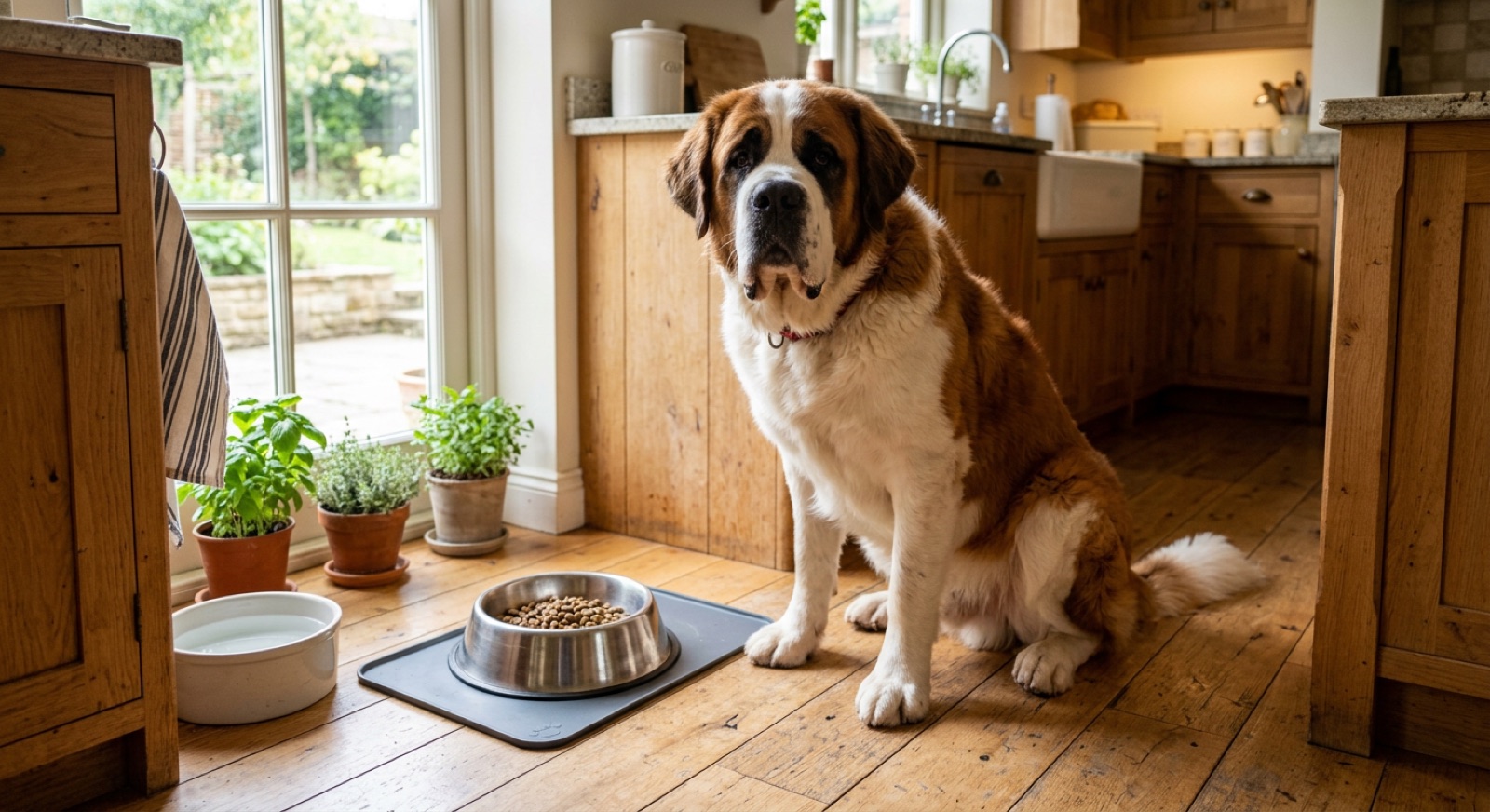
Why St. Bernards end up needing a new home
The Canadian Kennel Club describes the Saint as "good-natured and kindly," a "relatively easygoing dog with a gentle nature." Temperament is almost never the reason one gets rehomed. The recurring reasons:
- Vet costs at giant scale. The dominant driver. Everything from anaesthesia to arthritis medication doses by weight, orthopaedic problems are over-represented in giant breeds, and a single surgery quote can outrun a family budget in one phone call. Our financial-hardship guide exists for exactly this situation.
- The puppy-to-adult surprise. Families bring home an adorable movie-famous puppy and meet a full-grown giant eighteen months later. The house, the car, and the food budget were sized for the puppy.
- Drool and shedding at volume. Constant, seasonal, and on everything. It quietly wears households down and drives more surrenders than any listing admits.
- A move into housing that cannot take a giant dog. Weight limits and nervous landlords remove most of the rental market.
- Lifting and mobility. An aging owner, or an aging dog, and nobody in the house who can help a very heavy dog with stairs, cars, or getting up.
None of this means your dog is a problem. It means a giant breed met circumstances that could not carry it, and a careful rehoming to a prepared home fixes exactly that.
The screening priorities unique to St. Bernards
Saint screening is physics and budget, checked in that order.
1. The household physics, verified. Does the applicant own or rent, and if renting, does the lease actually permit a dog this size (ask to see the clause)? Is there room indoors, a vehicle the dog fits in, and a home without long staircases if your dog has joint flags? Are there toddlers a giant dog could knock over with pure affection? A family that has not thought about any of this has not thought about the breed, however much they loved the movies.
2. A budget that can genuinely carry a giant. Put the honest cost picture in the listing: what a year of food runs, what the last vet year cost, and anything the vet has flagged. Saints are deep-chested giants, so the new home should also know bloat (gastric dilatation volvulus) is a same-hour emergency and what the warning signs look like: a swollen belly, unproductive retching, restlessness. The right adopter reads the numbers and applies anyway; the one who bristles at the cost conversation is the same budget mismatch that created your listing.
What you must disclose
On a dog this size, disclosure protects both the dog and the household inheriting it.
- Joint and health flags, in full. Hips, elbows, and anything cardiac the vet has raised, with records and the vet's name. Giant-breed orthopaedic care is expensive and the new home should budget with open eyes.
- The drool and shedding level, truthfully. It filters better than any question you could ask.
- Strength and manners. Leash behaviour, jumping, and door habits described as they are today. A friendly Saint with momentum is still a physical event.
- Behaviour with children, dogs, and cats. Saints are famously patient with kids, but describe your dog, not the breed.
- Heat tolerance. A heavy-coated giant needs shade, water, and a summer routine; pass yours on.
- The food bill. A practical number from your own experience, so the budget conversation happens before the handover.
St. Bernard rescues and where to ask
There is no large St. Bernard-specific rescue organization based in Canada; the breed community handles rehoming through referral. Contact them early and list on LocalPetFinder in parallel. One verified option:
Should you charge a rehoming fee?
Charge a rehoming fee. A few hundred dollars for a healthy adult Saint is normal in Canada (this is a directional range, not a fixed rule), paired with a vet reference and a meeting at your home or theirs. The fee filters out impulse applicants who fell for the image without pricing the reality, and it selects for the prepared, financially ready home a giant breed needs. If your dog is a senior or has orthopaedic costs ahead, weighting the screening toward the financially ready home rather than the fee amount is a sensible trade. Donate the fee to a giant-breed rescue afterward if you would rather not keep it.
How LocalPetFinder rehoming works
- Submit a free listing at /rehome/submit. Photos, age, breed, spay or neuter status, compatibility, an honest behavioural profile, your reason for rehoming, and a fee. The form takes about 5 minutes and your dog never leaves your home.
- We review it for completeness and basic safety, usually within 24 to 48 hours, then it goes live.
- Your St. Bernard appears alongside rescue dogs on the St. Bernard listings and the main adoption pages, marked “Owner Rehoming.” Your email stays private.
- You screen and choose. Vetted adopters reach you through a verified contact form. You decide who to respond to, who to meet, and who gets the dog.
Ready to rehome your St. Bernard responsibly?
List your St. Bernard on LocalPetFinder for free. Your listing appears next to rescue dogs, you control the screening, and we never share your email publicly.
Start Your Free Listing →Anti-scam rules (read every line)
- Never list as “free to good home.” A fair fee is the single best filter against flippers and bad-faith adopters.
- Insist on a meet-and-greet, ideally at the adopter's home. Anyone who refuses a home check is hiding their living situation.
- Be suspicious of anyone offering more than your fee, or pushing for a fast, no-questions handover.
- Get a written agreement and a vet reference, transfer the microchip registration, and prefer e-transfer over cash for a paper trail.