The short answer
Rehome your dog on LocalPetFinder, free
List your dog at no cost. They stay home until the right family is found, you screen adopters through a verified contact form, and you choose who adopts. Reviewed within 24 to 48 hours.
Why Catahoulas end up needing a new home
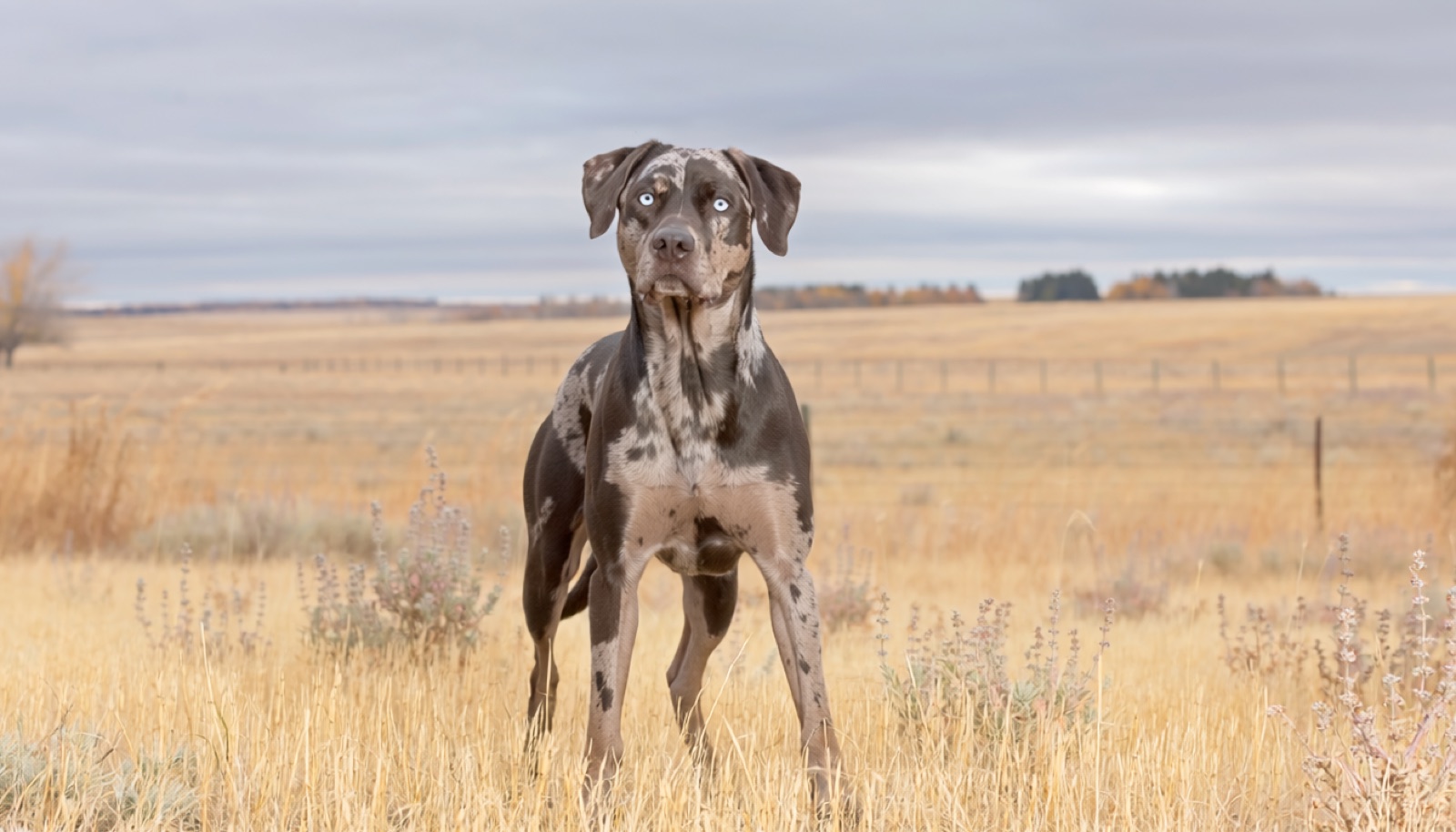
The Catahoula is not a Canadian Kennel Club recognized breed, and that gap says something useful: this is a regional American working dog, not a companion breed with generations of pet selection behind it. The American Kennel Club describes "a multi-purpose working dog that is well-muscled and powerful, but with a sense of agility and endurance," a dog that is "serious while working and playful at home." The recurring surrender reasons:
- A working dog with no work. The overwhelming driver. A dog bred to range hard country and face wild hogs does not have an off switch a suburb can reach. Under-worked Catahoulas dig, dismantle, escape, and patrol, and the household concludes the dog is broken when the dog is just unemployed.
- Bought on the looks. Merle coats and glass eyes make striking puppies, and a share of Canadian Catahoulas were acquired exactly that way, on a photo, by households that had never met the breed working.
- Intensity and independence. This is a decisive, pushy, self-directed dog. Handlers without working-breed experience feel out-gunned by adolescence.
- Dog selectivity. Catahoulas often play rough, work rude, and take same-sex challenges seriously, and dog-park optimism ends badly often enough to wear a household down.
- Wariness and territory. A natural watchdog streak that needs managed introductions, which busy households never planned to run.
None of this means your dog is broken. It means a serious rural working breed landed in the wrong setting, and a careful rehoming into the right one is not a downgrade for the dog; it is the point.
The screening priorities unique to Catahoulas
Catahoula screening is about work first, and everything else follows from it.
1. A home with a real job for the dog. Ask what the dog's Tuesday looks like, concretely. Acreage with stock, hunting or hog-dog experience (rarer in Canada, but it exists), or a serious dog-sport household running scent work, herding, or protection-adjacent sports several days a week: those are the answers that fit. A big yard is not a job, and "we're very active, we hike on weekends" is the answer that created your listing. Rural and farm applicants who have owned working breeds are the strongest signal.
2. Experienced, structured handling. The right adopter has owned decisive working dogs before, talks about structure and clear rules rather than dominance, and is not rattled by a dog with opinions. This is not a first-time-owner breed, and it is kinder to say so in the listing than to bounce the dog through a soft placement.
3. Containment and honest matching on dogs and strangers. A powerful, athletic, driven dog needs fencing that has been checked against its actual escape methods, and a household composition matched to its real history: same-sex selectivity, play style, and how it reads strangers at the gate. Answer from what your dog has done, not what you hope.
What you must disclose
Catahoula disclosure is behavioural, and completeness is what keeps the placement safe.
- The drive, and what happens when it is under-fed. What your dog does with too little work: the digging, the destruction, the patrolling, the escapes. The right home reads that list and nods.
- Behaviour with other dogs. Same-sex history, play style, any scuffles with circumstances. This decides household composition more than any other line.
- The stranger and territory line. Door behaviour, fence behaviour, and how introductions have to be run.
- Prey and stock drive, from history. Cats, small dogs, livestock, wildlife. For a breed developed on hogs and cattle, "unknown" is a legitimate answer; "fine, probably" is not.
- Any bite or snap history, in writing. Talk to your vet or a credentialled behaviour professional first, disclose everything, and place only into a proven, fully informed home.
- Anything your vet has flagged, including hearing and vision. Congenital deafness and eye issues occur in the breed, particularly in heavily white or double-merle dogs, so pass on complete vet records with the vet's name attached.
Catahoula Leopard Dog rescues and where to ask
There is no verified Catahoula-specific rescue based in Canada with steady intake; the volunteer efforts that exist are small and intermittent, and most Canadian Catahoulas move through working-breed-savvy all-breed rescues. Contact rescues in your region that know high-drive working dogs, be upfront about the drive and the dog-selectivity so they can match correctly, and list on LocalPetFinder in parallel rather than waiting on a single door.
Should you charge a rehoming fee?
Charge a rehoming fee. A few hundred dollars for a healthy adult Catahoula is normal in Canada (this is a directional range, not a fixed rule), paired with a vet reference and a meeting at your home or theirs. Merle coats and pale eyes make this breed a magnet for looks-first applicants, which is exactly the acquisition pattern that created your listing, and a real fee plus a blunt working-dog paragraph filters it out. Donate it to a working-breed rescue afterward if you would rather not keep it.
How LocalPetFinder rehoming works
- Submit a free listing at /rehome/submit. Photos, age, breed, spay or neuter status, compatibility, an honest behavioural profile, your reason for rehoming, and a fee. The form takes about 5 minutes and your dog never leaves your home.
- We review it for completeness and basic safety, usually within 24 to 48 hours, then it goes live.
- Your Catahoula Leopard Dog appears alongside rescue dogs on the Catahoula Leopard Dog listings and the main adoption pages, marked “Owner Rehoming.” Your email stays private.
- You screen and choose. Vetted adopters reach you through a verified contact form. You decide who to respond to, who to meet, and who gets the dog.
Ready to rehome your Catahoula Leopard Dog responsibly?
List your Catahoula Leopard Dog on LocalPetFinder for free. Your listing appears next to rescue dogs, you control the screening, and we never share your email publicly.
Start Your Free Listing →Anti-scam rules (read every line)
- Never list as “free to good home.” A fair fee is the single best filter against flippers and bad-faith adopters.
- Insist on a meet-and-greet, ideally at the adopter's home. Anyone who refuses a home check is hiding their living situation.
- Be suspicious of anyone offering more than your fee, or pushing for a fast, no-questions handover.
- Get a written agreement and a vet reference, transfer the microchip registration, and prefer e-transfer over cash for a paper trail.