The short answer
Rehome your dog on LocalPetFinder, free
List your dog at no cost. They stay home until the right family is found, you screen adopters through a verified contact form, and you choose who adopts. Reviewed within 24 to 48 hours.
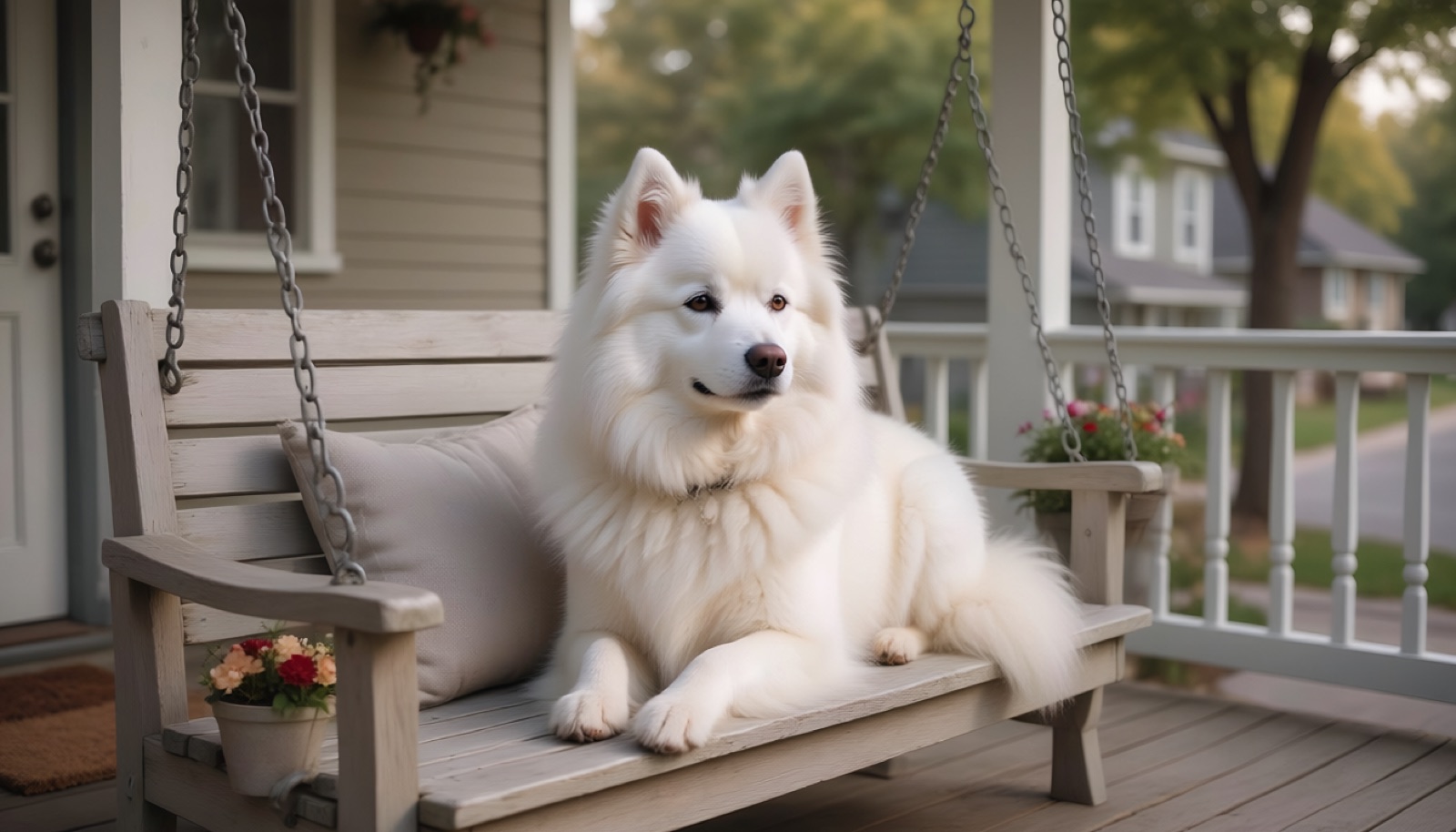
Why American Eskimo Dogs end up needing a new home
The American Kennel Club describes the Eskie as "striking good looks with a quick and clever mind in a total brains-and-beauty package," a dog that is "always alert and friendly, though a bit conservative when making new friends." Both halves of that description drive the surrenders. The recurring reasons:
- Bought as a fluffy toy. The biggest driver. The white coat and the size sell a lap dog; what arrives is a busy little working spitz that needs daily mental work and gets loud and inventive without it. Households expecting decorative calm read a normal, under-occupied Eskie as a behaviour problem.
- The barking. Eskies are committed alert watchdogs with opinions, and in an apartment or a townhouse the announcing becomes a complaint file. Training softens it; nothing removes it.
- A new baby taking the bandwidth. A common Eskie-specific pattern: a clever, attention-fed dog loses its training time and its audience at exactly the moment a vocal watchdog and a napping newborn stop mixing. Our new-baby guide covers that situation in full.
- Reserve with strangers read as unfriendliness. Breed-typical conservatism with new people surprises households expecting instant retriever warmth, especially around visiting kids.
- The coat. A dense white double coat that sheds year-round and needs real weekly brushing to stay comfortable.
None of this means your dog is broken. It means a clever working spitz was sold on its looks, and a careful rehoming to a home that wants the brain fixes exactly that.
The screening priorities unique to American Eskimo Dogs
Eskie screening is about time and appetite for the brain, more than space or strength.
1. A home that wants a clever dog, not a decorative one. Ask what the applicant plans to do with the dog day to day. The right adopter talks about trick training, games, puzzle feeders, and walks with jobs in them, and often has spitz or clever-small-breed experience. The applicant who leads with the fluff and has no plan for the mind is the same mismatch that created your listing.
2. Honest bark tolerance and alone-time reality. Say plainly in the listing that the dog announces the world, and ask how many hours the dog would be alone. A busy, vocal, people-fed breed in an empty house all day produces the distress barking that ends placements. Detached housing, tolerant neighbours, or someone usually home all shift the odds.
3. A household matched to your dog's actual line with children and strangers. Eskies are conservative with new people by type, and individual dogs vary from social to genuinely wary. Describe your dog's real history with kids, visitors, and handling, and screen households with young children against that history rather than the breed's cute reputation.
What you must disclose
Eskie disclosure is behavioural and practical in equal measure.
- The barking pattern, honestly. When, how much, and anything the neighbours have said. This decides the housing fit more than any other line.
- Alone-time behaviour. What the dog does in an empty house, and how long it has been used to having company.
- Behaviour with children and strangers, from history. How the dog warms up, what pushing too fast looks like, and any snapping or guarding, described plainly. An informed home manages it easily; a surprised one fails.
- What the brain has learned. Cues, tricks, routines, and the games your dog loves. For a clever breed this page is the best handover gift you can send.
- The coat routine. The weekly brushing, the seasonal shedding, and a warning never to shave the double coat.
- Vet records, complete. Anything the vet has flagged, with the vet's name attached.
American Eskimo Dog rescues and where to ask
There is no verified American Eskimo-specific rescue based in Canada with steady intake; the Eskie community here is small and rescue moves through informal cross-border networks and all-breed organizations. Contact all-breed rescues in your region that know spitz breeds, be upfront about the barking and the energy, and list on LocalPetFinder in parallel rather than waiting on a single door.
Should you charge a rehoming fee?
Charge a rehoming fee. A few hundred dollars for a healthy adult Eskie is normal in Canada (this is a directional range, not a fixed rule), paired with a vet reference and a meeting at your home or theirs. Small, white, and photogenic is exactly the profile that attracts impulse applicants and the occasional reseller, and a real fee plus screening filters both out. Donate it to a rescue afterward if you would rather not keep it.
How LocalPetFinder rehoming works
- Submit a free listing at /rehome/submit. Photos, age, breed, spay or neuter status, compatibility, an honest behavioural profile, your reason for rehoming, and a fee. The form takes about 5 minutes and your dog never leaves your home.
- We review it for completeness and basic safety, usually within 24 to 48 hours, then it goes live.
- Your American Eskimo Dog appears alongside rescue dogs on the American Eskimo Dog listings and the main adoption pages, marked “Owner Rehoming.” Your email stays private.
- You screen and choose. Vetted adopters reach you through a verified contact form. You decide who to respond to, who to meet, and who gets the dog.
Ready to rehome your American Eskimo Dog responsibly?
List your American Eskimo Dog on LocalPetFinder for free. Your listing appears next to rescue dogs, you control the screening, and we never share your email publicly.
Start Your Free Listing →Anti-scam rules (read every line)
- Never list as “free to good home.” A fair fee is the single best filter against flippers and bad-faith adopters.
- Insist on a meet-and-greet, ideally at the adopter's home. Anyone who refuses a home check is hiding their living situation.
- Be suspicious of anyone offering more than your fee, or pushing for a fast, no-questions handover.
- Get a written agreement and a vet reference, transfer the microchip registration, and prefer e-transfer over cash for a paper trail.