The short answer
Rehome your dog on LocalPetFinder, free
List your dog at no cost. They stay home until the right family is found, you screen adopters through a verified contact form, and you choose who adopts. Reviewed within 24 to 48 hours.
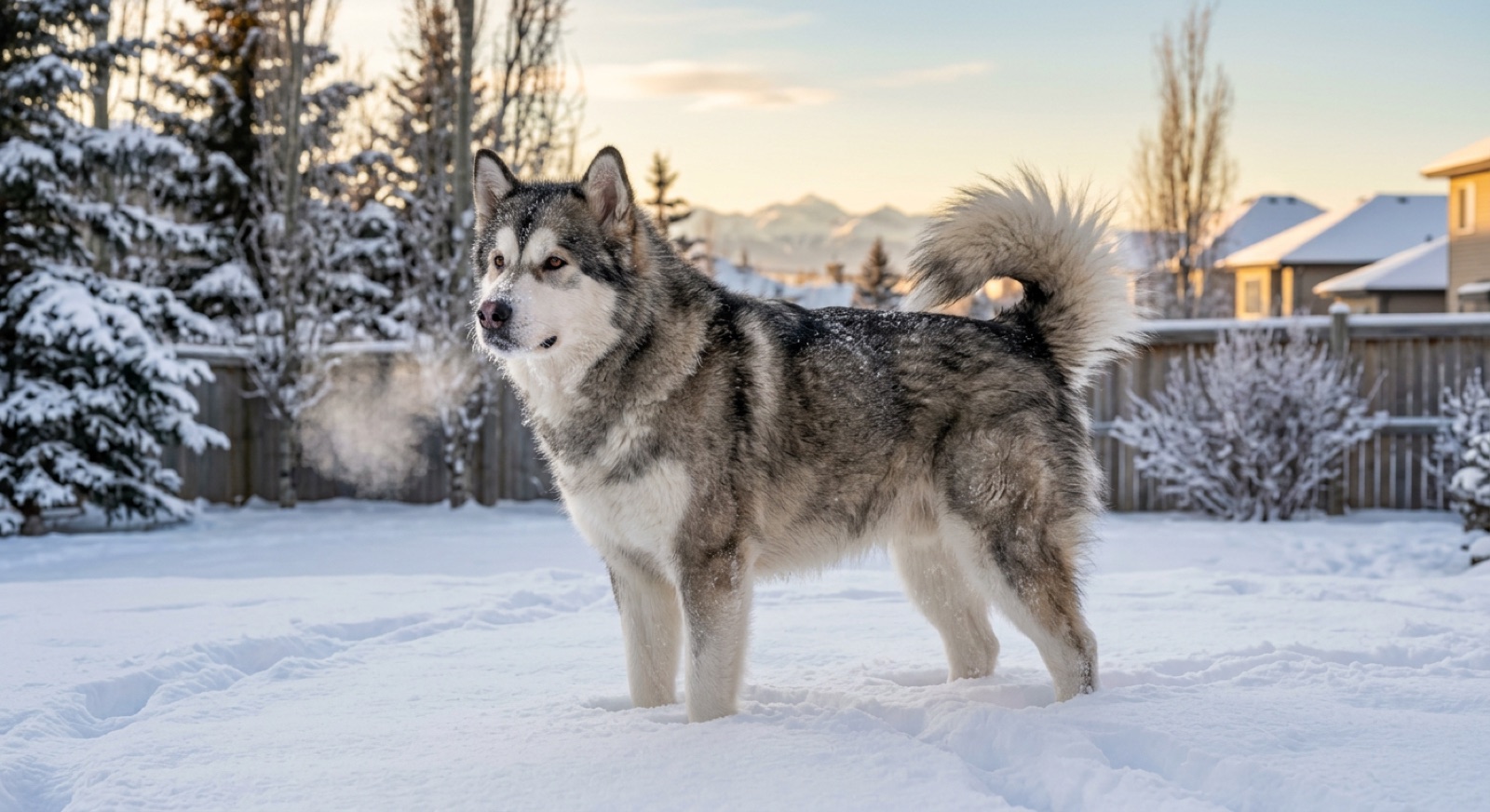
Why Alaskan Malamutes end up needing a new home
The Canadian Kennel Club calls the Malamute "affectionate and friendly, but definitely strong-willed," a dog that was "born to pull" and "requires lots of exercise." Both halves of that sentence drive the surrenders. The recurring reasons:
- Strength beyond the household. The biggest Malamute-specific driver. A Husky that pulls is a nuisance; a Malamute that pulls moves the person on the other end of the leash. When walks stop being safe for the walker, exercise collapses and everything downstream of it follows.
- The Husky problems, scaled up. Escaping, digging, roaming, and a serious prey drive are shared northern-breed traits, and a Malamute applies more mass and more patience to all of them. Our Husky rehoming guide covers that whole cluster and it reads across almost unchanged.
- Independence mistaken for defiance. Malamutes were bred to haul freight and make their own decisions doing it. Recall is unreliable, obedience is negotiated, and households expecting biddability read a normal Malamute as a training failure.
- Dog-to-dog selectivity. Same-sex scuffles and a low tolerance for rude dogs are common in the breed, and a multi-dog mismatch grinds a household down.
- The coat and the costs. A dense double coat that blows out seasonally at industrial volume, plus food and vet bills sized for a big working dog.
None of this means your dog is broken. It means a serious working breed landed in a household that could not hold it, and a careful rehoming to a prepared home fixes exactly that.
The screening priorities unique to Alaskan Malamutes
Malamute screening is Husky screening plus a strength test, and the strength test comes first.
1. A handler equipped for the dog's power. Ask what dogs the applicant has owned and handled. Previous Malamute or comparable large northern-breed experience is the strongest signal; an active household that has only owned mid-sized easy breeds needs a very honest conversation before you proceed. Ask who will walk the dog, and whether everyone in the household can physically hold it when a rabbit crosses the path. A kind home that cannot control the dog is not a safe home, however good the intentions.
2. Containment the dog cannot beat, and no off-leash plans. A tall physical fence, checked against your dog's actual escape methods, and a clear understanding that recall can never be trusted near roads. Describe exactly how your dog tests containment (digging, climbing, gate-opening, straight power through) so the new home secures against it before arrival. The full escape-proofing framework is in our Husky guide; hold Malamute applicants to it without discount.
3. Honest matching on other animals. Answer from your dog's history on cats, small dogs, and same-sex housemates, not from hope. The safest placements for a selective Malamute are only-dog homes or experienced owners with a compatible opposite-sex companion, and the listing should say which one your dog needs.
What you must disclose
Malamute disclosure is mostly about power and instinct, and the right home will thank you for the detail.
- Leash strength and equipment. What your dog pulls like, what gear you use, and what has failed. The next handler plans around this on day one.
- Every escape, with method. Dug, climbed, opened, or bolted, so containment gets fixed before the dog arrives, not after.
- Behaviour with other dogs. Same-sex history and any scuffles, with circumstances. This decides the household composition more than any other line.
- Prey drive, from history. Cats, small dogs, livestock, and wildlife chasing, described as it actually happened.
- The coat workload. The weekly brushing and the seasonal blowouts, honestly. Northern-breed people already know; the listing just needs to confirm you do too.
- Vet records, complete. Joint flags matter in a big working breed; hand over everything with the vet's name.
Alaskan Malamute rescues and where to ask
Malamute-specific rescue in Canada is thin, but the northern-breed network covers the breed well and understands exactly why Malamutes get surrendered. Contact them early and list on LocalPetFinder in parallel. One verified option:
Should you charge a rehoming fee?
Charge a rehoming fee. A few hundred dollars for a healthy adult Malamute is normal in Canada (this is a directional range, not a fixed rule), paired with a vet reference and a meeting at your home or theirs. The fee matters for the same reason it matters for Huskies: a striking, desirable northern breed attracts resellers and impulse applicants who fell for the wolf-adjacent look without pricing the workload. A real fee plus an honest strength conversation filters both out. Donate it to a northern-breed rescue afterward if you would rather not keep it.
How LocalPetFinder rehoming works
- Submit a free listing at /rehome/submit. Photos, age, breed, spay or neuter status, compatibility, an honest behavioural profile, your reason for rehoming, and a fee. The form takes about 5 minutes and your dog never leaves your home.
- We review it for completeness and basic safety, usually within 24 to 48 hours, then it goes live.
- Your Alaskan Malamute appears alongside rescue dogs on the Alaskan Malamute listings and the main adoption pages, marked “Owner Rehoming.” Your email stays private.
- You screen and choose. Vetted adopters reach you through a verified contact form. You decide who to respond to, who to meet, and who gets the dog.
Ready to rehome your Alaskan Malamute responsibly?
List your Alaskan Malamute on LocalPetFinder for free. Your listing appears next to rescue dogs, you control the screening, and we never share your email publicly.
Start Your Free Listing →Anti-scam rules (read every line)
- Never list as “free to good home.” A fair fee is the single best filter against flippers and bad-faith adopters.
- Insist on a meet-and-greet, ideally at the adopter's home. Anyone who refuses a home check is hiding their living situation.
- Be suspicious of anyone offering more than your fee, or pushing for a fast, no-questions handover.
- Get a written agreement and a vet reference, transfer the microchip registration, and prefer e-transfer over cash for a paper trail.