The short answer
Rehome your dog on LocalPetFinder, free
List your dog at no cost. They stay home until the right family is found, you screen adopters through a verified contact form, and you choose who adopts. Reviewed within 24 to 48 hours.
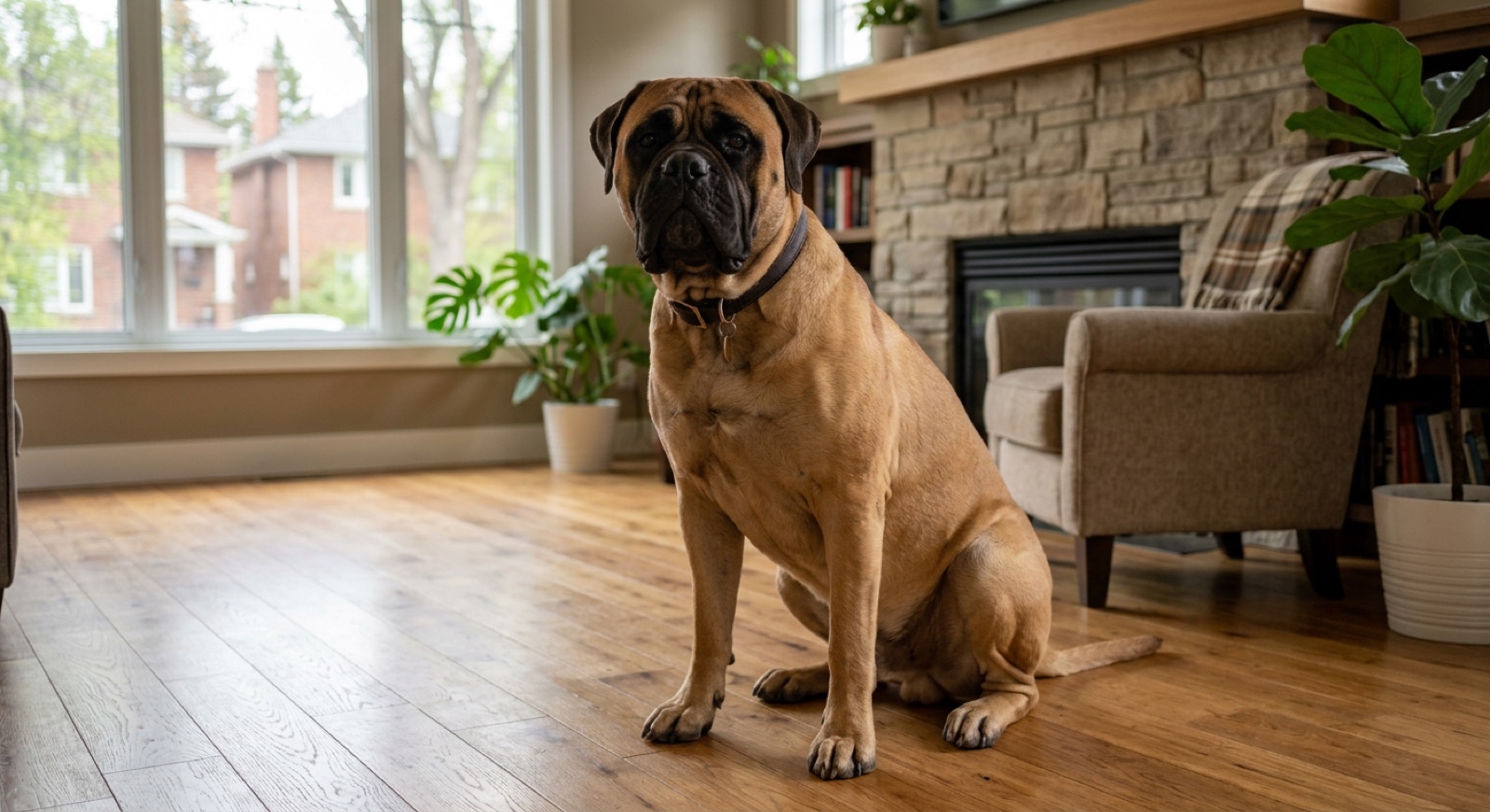
Why Bullmastiffs end up needing a new home
The Canadian Kennel Club describes the Bullmastiff as "bold, fearless and courageous, making it a very dependable guard dog," while noting it is "not a high-energy dog." The calm half makes the breed easy to live with; the sheer scale is what drives the surrenders. The recurring reasons owners reach the rehoming decision:
- Moving. The single most common trigger. Finding a rental that accepts a dog well over a hundred pounds is genuinely hard; weight limits, insurance requirements, and nervous landlords remove most of the market, and a household downsizing to a condo often has no path at all. Our moving guide covers that situation without judgement.
- Underestimating the scale. The food bill, the vet bills (everything from anaesthesia to arthritis medication scales with weight), the space a dog this size occupies, and the strength on a leash all turn out larger than the puppy-day plan.
- Adolescence at a hundred pounds. A boisterous young Bullmastiff without training can knock over a child or pull an adult off their feet, and households without big-dog experience hit a wall before the famous calm arrives.
- The drool. Real, constant, and on the walls. It sounds trivial until someone in the household cannot live with it.
- Guardian instincts without guidance. The breed's dependable protectiveness needs a confident, experienced handler; unmanaged, it becomes wariness of visitors that a busy household cannot supervise.
None of this means your dog is a problem. It means a giant breed met circumstances that could not hold it, and a careful rehoming fixes exactly that.
The screening priorities unique to Bullmastiffs
Bullmastiff screening is physics first, experience second.
1. The household physics, verified. A giant breed multiplies every practical question. Does the applicant own or rent, and if renting, does the lease actually permit a dog this size (ask to see the clause, because weight limits are the most common hidden dealbreaker)? Is there a securely fenced yard, a vehicle the dog fits in, and a home without long staircases if your dog has joint flags? Are there toddlers or frail household members a hundred-pound dog could knock over with affection alone? An applicant who has not thought about any of this has not thought about the breed.
2. Giant-breed or guardian-breed experience. Ask what dogs the applicant has owned and how they would manage a wary greeting at the front door. The right home understands calm, consistent handling of a guardian breed and expects the aloofness with strangers. Previous mastiff-type experience is the strongest signal you will get. An applicant who wants an imposing dog for the wrong reasons is the one your fee and vet-reference screening exists to filter out.
How long it realistically takes, and the handover logistics
Slower to start, stronger to finish. Fewer people search for giant breeds than for retrievers, so applications trickle rather than flood, but mastiff people are devoted and adult Bullmastiffs rarely come up for adoption in Canada. Expect a few weeks to a couple of months for the right screened home, and start the moment a move becomes likely rather than the week the truck arrives.
Plan the physical handover like the logistics problem it is. A Bullmastiff needs a vehicle it actually fits in, an extra-large crate or a safely harnessed cargo area, and ideally a pre-handover visit so the dog meets the adopter before travel day. Send the dog with its own bed, food for the transition, and the vet file. If the distance is long, break the trip rather than improvising; a stressed giant dog in an unfamiliar sedan is how handovers go wrong. And whatever the timeline pressure, never hand the dog over in a parking lot.
What you must disclose
On a dog this size, disclosure is a safety document for the new household.
- Strength and manners, honestly. Leash behaviour, jumping, door habits, and how the dog handles being moved off furniture, described as they are today.
- Behaviour with strangers and visitors. The breed's guardian instincts vary by dog; describe yours specifically, including any wariness, barking, or body-blocking at the door.
- Behaviour with other dogs, children, and cats. What is actually true of your dog, with context. Same-sex selectivity occurs in the breed and needs an informed home.
- Joint and health flags. Anything the vet has raised, in full, with the vet's name. Giant breeds carry real orthopaedic and heart considerations and shorter lifespans, and the new home should hear the honest picture and budget for vet care that scales with weight.
- The drool level, truthfully. It filters better than any question you could ask.
- The food bill. A practical number from your own experience, so the budget conversation happens before the handover.
Bullmastiff rescues and where to ask
Bullmastiff-specific rescue in Canada is a small volunteer network, so contact them early and list on LocalPetFinder in parallel rather than waiting on a single door. One verified option:
Should you charge a rehoming fee?
Charge a real rehoming fee. A fee of a few hundred dollars for a healthy adult is normal in Canada (this is a directional range, not a fixed rule), paired with a vet reference and a meeting at your home or theirs. For a Bullmastiff the fee also does guardian-breed work: it filters out the applicant who wants an imposing dog on impulse, and selects for the experienced home that read the honest size-and-drool description and applied anyway. If your dog is a senior or has joint costs ahead, weighting the screening toward the financially ready home rather than the fee amount is a sensible trade. You can donate the fee to a mastiff rescue afterward if you would rather not keep it.
How LocalPetFinder rehoming works
- Submit a free listing at /rehome/submit. Photos, age, breed, spay or neuter status, compatibility, an honest behavioural profile, your reason for rehoming, and a fee. The form takes about 5 minutes and your dog never leaves your home.
- We review it for completeness and basic safety, usually within 24 to 48 hours, then it goes live.
- Your Bullmastiff appears alongside rescue dogs on the Bullmastiff listings and the main adoption pages, marked “Owner Rehoming.” Your email stays private.
- You screen and choose. Vetted adopters reach you through a verified contact form. You decide who to respond to, who to meet, and who gets the dog.
Ready to rehome your Bullmastiff responsibly?
List your Bullmastiff on LocalPetFinder for free. Your listing appears next to rescue dogs, you control the screening, and we never share your email publicly.
Start Your Free Listing →Anti-scam rules (read every line)
- Never list as “free to good home.” A fair fee is the single best filter against flippers and bad-faith adopters.
- Insist on a meet-and-greet, ideally at the adopter's home. Anyone who refuses a home check is hiding their living situation.
- Be suspicious of anyone offering more than your fee, or pushing for a fast, no-questions handover.
- Get a written agreement and a vet reference, transfer the microchip registration, and prefer e-transfer over cash for a paper trail.