The short answer
Rehome your dog on LocalPetFinder, free
List your dog at no cost. They stay home until the right family is found, you screen adopters through a verified contact form, and you choose who adopts. Reviewed within 24 to 48 hours.
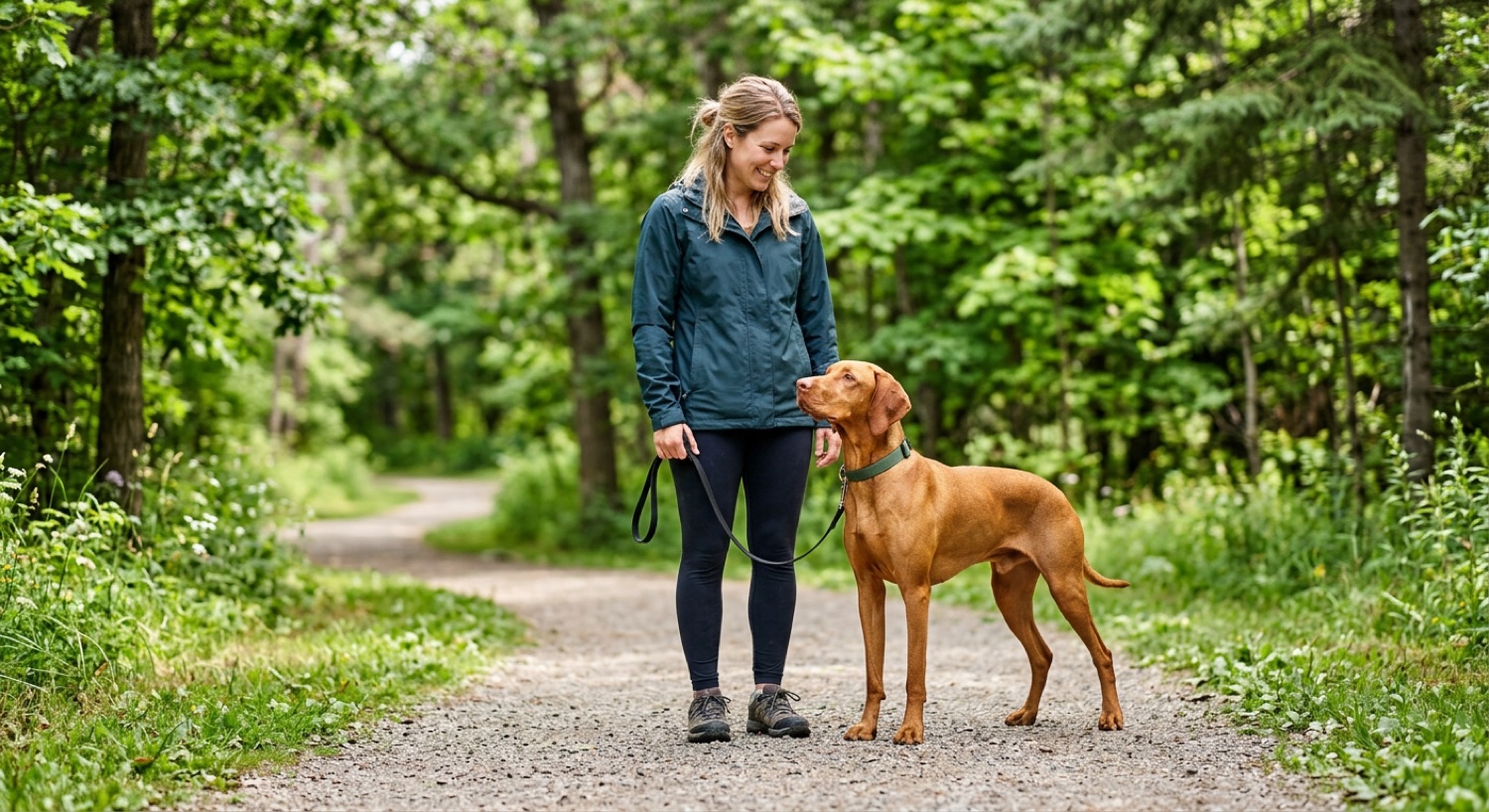
Why Vizslas end up needing a new home
The Canadian Kennel Club describes a lively, affectionate, sensitive dog that thrives on human companionship, bred in Hungary to work beside its handler all day. Both halves of that sentence drive the surrenders. The recurring reasons:
- Separation distress. The defining Vizsla pattern. A breed built to shadow its person all day copes poorly with long empty houses, and the crying, destruction, and neighbour complaints that follow are the most common road to a Vizsla listing. This is the velcro trait with nowhere to stick, not a broken dog.
- The exercise floor. An adult Vizsla needs genuinely vigorous daily exercise, commonly an hour or two or more of running, fetch, and real activity, plus mental work. A walk around the block does not touch it, and an under-exercised Vizsla turns restless, anxious, and destructive, which compounds the alone-time problem.
- Schedule changes. The household that worked from home goes back to the office, a shift pattern changes, and the dog that was fine is suddenly alone six hours a day. Nothing about the dog changed.
- Sensitivity mismatched with harsh handling. Vizslas are soft, emotional dogs that shut down or spiral under yelling and heavy corrections. A gentle breed in a rough situation looks like a problem dog and is not.
- Winter reality. A thin single coat means a Canadian Vizsla needs a jacket and shorter outings in deep cold, and the exercise floor does not lower in January. Households that cannot exercise a high-drive dog through winter feel it by February.
None of this means your dog is broken. A Vizsla that lands with active people who are home a lot is usually the easiest, most devoted dog they will ever own.
The screening priorities unique to Vizslas
Vizsla screening is two questions, and the right home clears both instead of trading one against the other.
1. How much is the dog alone? Ask for the honest weekly picture: who is home when, and what the longest routine empty stretch looks like. The best Vizsla homes are people who work from home, retirees who hike, active families with staggered schedules, or households planning daycare and walkers as a routine rather than a rescue plan. An applicant with a nine-hour office day and good intentions is the same setup your dog is leaving. If your dog already shows separation distress, disclose it fully and screen even harder here.
2. What does the exercise week actually look like? Ask in hours and kilometres, not adjectives. Runners, hikers, hunters, and dog-sport households are the natural fit; the CKC-profile phrase to keep in mind is a dog bred to work beside its handler all day. "We have a big yard" is storage, not exercise, and a Vizsla alone in a yard is just anxious outdoors.
3. A gentle household. This is a soft, sensitive breed. Screen for calm, positive-training homes and mention how your dog responds to raised voices, so an emotional dog lands with people who handle it with patience.
What you must disclose
Vizsla disclosure is mostly about the two failure modes, told honestly.
- Alone-time behaviour, completely. What the dog does in an empty house, the longest stretch it tolerates, any crying, destruction, or escape attempts, and anything a vet or trainer has advised about it. This is the disclosure that decides the placement, and hiding it guarantees a bounce.
- The real exercise routine. What your dog gets now, what it needs to be settled, and what an under-exercised week looks like.
- Sensitivity notes. How your dog responds to raised voices, corrections, and chaos, so a soft dog lands in a soft home.
- Behaviour with children, dogs, and cats. From history. Vizslas are typically gentle and social, but say what you have actually seen, including any birdiness around small pets in a pointing breed.
- The winter routine. The jacket, the cold-day adjustments, and how you kept the exercise up through a Canadian winter.
- Vet records, complete. Anything flagged, with the vet's name attached.
Vizsla rescues and where to ask
Vizsla-specific rescue in Canada runs through the breed-club community, which knows exactly why Vizslas get surrendered and screens adopters for company and exercise. Intake is small, so contact them early, be complete about alone-time behaviour and any incident history, and list on LocalPetFinder in parallel. One verified option:
Should you charge a rehoming fee?
Charge a rehoming fee. A few hundred dollars for a healthy adult Vizsla is normal in Canada (this is a directional range, not a fixed rule), paired with a vet reference and a meeting at your home or theirs. Vizslas are a striking, desirable sporting breed, and a real fee filters out impulse applicants who fell for the colour without reading the exercise paragraph. Donate it to a breed rescue afterward if you would rather not keep it.
How LocalPetFinder rehoming works
- Submit a free listing at /rehome/submit. Photos, age, breed, spay or neuter status, compatibility, an honest behavioural profile, your reason for rehoming, and a fee. The form takes about 5 minutes and your dog never leaves your home.
- We review it for completeness and basic safety, usually within 24 to 48 hours, then it goes live.
- Your Vizsla appears alongside rescue dogs on the Vizsla listings and the main adoption pages, marked “Owner Rehoming.” Your email stays private.
- You screen and choose. Vetted adopters reach you through a verified contact form. You decide who to respond to, who to meet, and who gets the dog.
Ready to rehome your Vizsla responsibly?
List your Vizsla on LocalPetFinder for free. Your listing appears next to rescue dogs, you control the screening, and we never share your email publicly.
Start Your Free Listing →Anti-scam rules (read every line)
- Never list as “free to good home.” A fair fee is the single best filter against flippers and bad-faith adopters.
- Insist on a meet-and-greet, ideally at the adopter's home. Anyone who refuses a home check is hiding their living situation.
- Be suspicious of anyone offering more than your fee, or pushing for a fast, no-questions handover.
- Get a written agreement and a vet reference, transfer the microchip registration, and prefer e-transfer over cash for a paper trail.