The short answer
Rehome your dog on LocalPetFinder, free
List your dog at no cost. They stay home until the right family is found, you screen adopters through a verified contact form, and you choose who adopts. Reviewed within 24 to 48 hours.
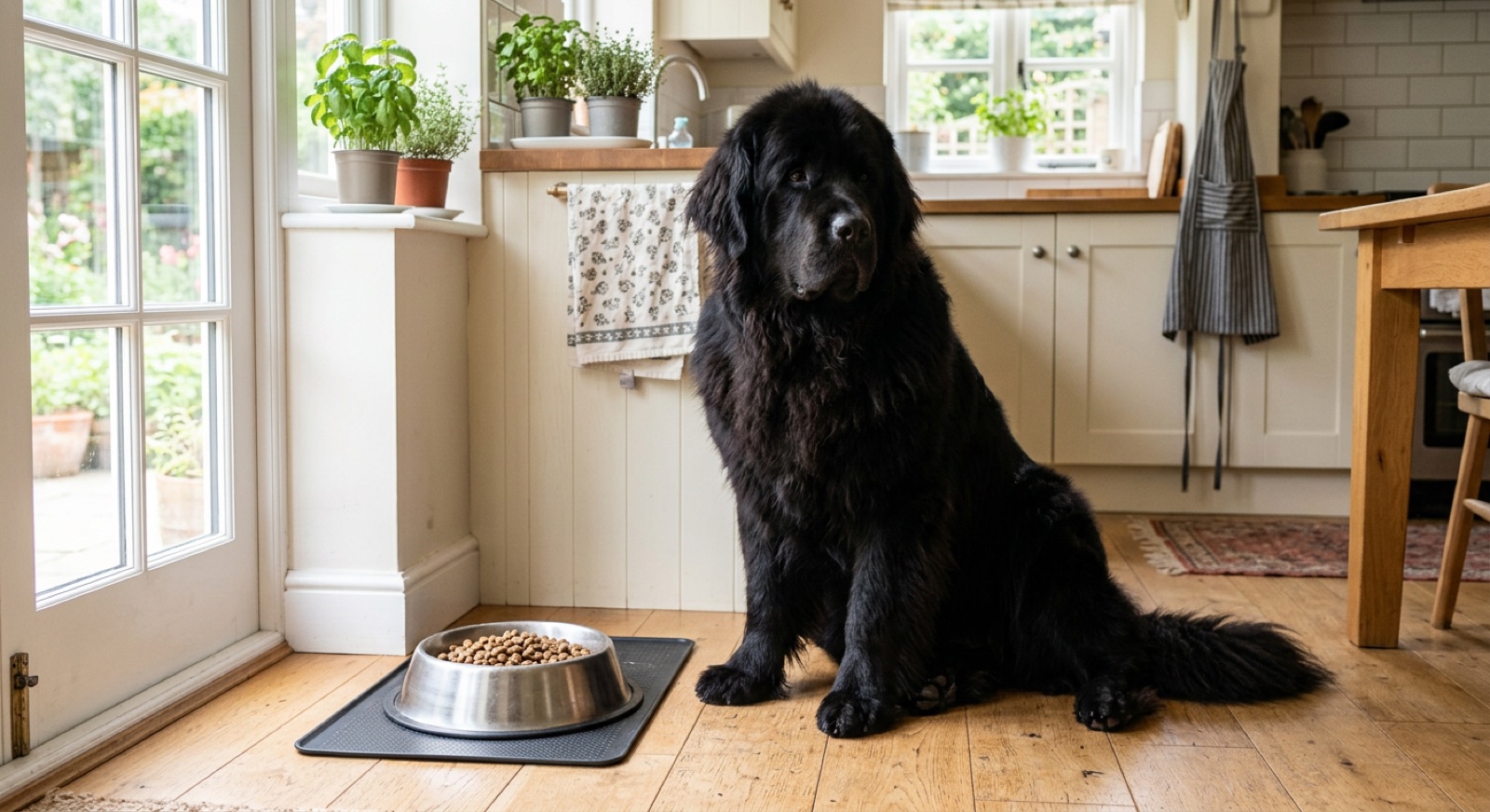
Why Newfoundlands end up needing a new home
The Canadian Kennel Club describes the Newfoundland as "benevolent, intelligent and dignified but capable of fun." That gentle-giant reputation is deserved, which is exactly why the surrender reasons are almost all practical:
- Costs that scale with the dog. The dominant driver. Food for a giant breed, vet bills where everything from anaesthesia to arthritis medication scales with weight, and grooming costs if the coat is professionally maintained. When a household budget tightens, the Newf's line items are the biggest on the pet ledger. Our financial-hardship guide exists for exactly this situation.
- The coat workload. A dense double coat that needs thorough brushing every week, sheds heavily in season, and mats painfully when neglected. Households that fall behind face a grooming bill or a miserable dog, and some quietly conclude they cannot keep up.
- The drool and the wet. Newfs drool, love water, and redistribute both around the house. It sounds charming in a breed profile and wears differently in year three.
- Space and lifting. A dog this size in a small home, or an aging owner who can no longer help a heavy dog with stairs, into a car, or up from the floor when the joints go.
- A move into housing that cannot take a giant breed. Weight limits remove most of the rental market.
None of this means your dog is a problem. It means the practical load outgrew the household, and a careful rehoming to a prepared home fixes exactly that.
The screening priorities unique to Newfoundlands
Newf screening is about the workload and the budget, in that order.
1. An adopter who understands the coat and the drool, from experience or honest research. Describe the real routine in the listing: the weekly brushing hours, the seasonal blowouts, the drool towels, the wet-dog logistics. The right adopter is a Newf person who reads all that and applies anyway, and the breed has a devoted following of exactly such people. An applicant who seems surprised by the grooming conversation is the same mismatch that created your listing.
2. A home with the space and the budget. Ask directly about housing (room indoors, a yard or reliable exercise space, no rental weight limits, and few stairs if your dog has joint flags) and honestly about budget, because giant-breed food and vet costs are structural, not optional. Newfs also carry the deep-chested giant's bloat risk (gastric dilatation volvulus, a same-hour emergency), so make sure the new home knows the warning signs: a swollen belly, unproductive retching, restlessness. A financially stretched placement just relives your crisis in a new address.
What you must disclose
Newf disclosure is mostly practical, and the practical truths are what make the placement last.
- The coat's real condition and routine. Current matting if any, the brushing schedule that keeps it healthy, and what professional grooming has cost you.
- The drool level, truthfully. It filters better than any question you could ask.
- Joint and heart flags. Anything the vet has raised, in full, with the vet's name. Giant breeds carry real orthopaedic and cardiac considerations, and the new home should hear the honest picture and budget for care that scales with weight.
- Behaviour with children, dogs, and cats. Newfs are famously patient, but describe your dog, not the breed.
- Water habits and outdoor logistics. A water-obsessed dog needs a home that finds it endearing.
- The food bill. A practical number from your own experience, so the budget conversation happens before the handover.
Newfoundland rescues and where to ask
Newfoundland rescue in Canada runs as a volunteer network of regional contacts rather than a single large organization, so start with the network and list on LocalPetFinder in parallel. One verified option:
Should you charge a rehoming fee?
Charge a rehoming fee. A few hundred dollars for a healthy adult Newfoundland is normal in Canada (this is a directional range, not a fixed rule), paired with a vet reference and a meeting at your home or theirs. The fee filters out impulse applicants who fell for the gentle-giant image without pricing the reality, and it signals to good adopters that you take the dog's welfare seriously. If your dog is a senior or has joint costs ahead, weighting the screening toward the financially ready home rather than the fee amount is a sensible trade. Donate the fee to a Newf rescue afterward if you would rather not keep it.
How LocalPetFinder rehoming works
- Submit a free listing at /rehome/submit. Photos, age, breed, spay or neuter status, compatibility, an honest behavioural profile, your reason for rehoming, and a fee. The form takes about 5 minutes and your dog never leaves your home.
- We review it for completeness and basic safety, usually within 24 to 48 hours, then it goes live.
- Your Newfoundland appears alongside rescue dogs on the Newfoundland listings and the main adoption pages, marked “Owner Rehoming.” Your email stays private.
- You screen and choose. Vetted adopters reach you through a verified contact form. You decide who to respond to, who to meet, and who gets the dog.
Ready to rehome your Newfoundland responsibly?
List your Newfoundland on LocalPetFinder for free. Your listing appears next to rescue dogs, you control the screening, and we never share your email publicly.
Start Your Free Listing →Anti-scam rules (read every line)
- Never list as “free to good home.” A fair fee is the single best filter against flippers and bad-faith adopters.
- Insist on a meet-and-greet, ideally at the adopter's home. Anyone who refuses a home check is hiding their living situation.
- Be suspicious of anyone offering more than your fee, or pushing for a fast, no-questions handover.
- Get a written agreement and a vet reference, transfer the microchip registration, and prefer e-transfer over cash for a paper trail.