The short answer
Rehome your dog on LocalPetFinder, free
List your dog at no cost. They stay home until the right family is found, you screen adopters through a verified contact form, and you choose who adopts. Reviewed within 24 to 48 hours.
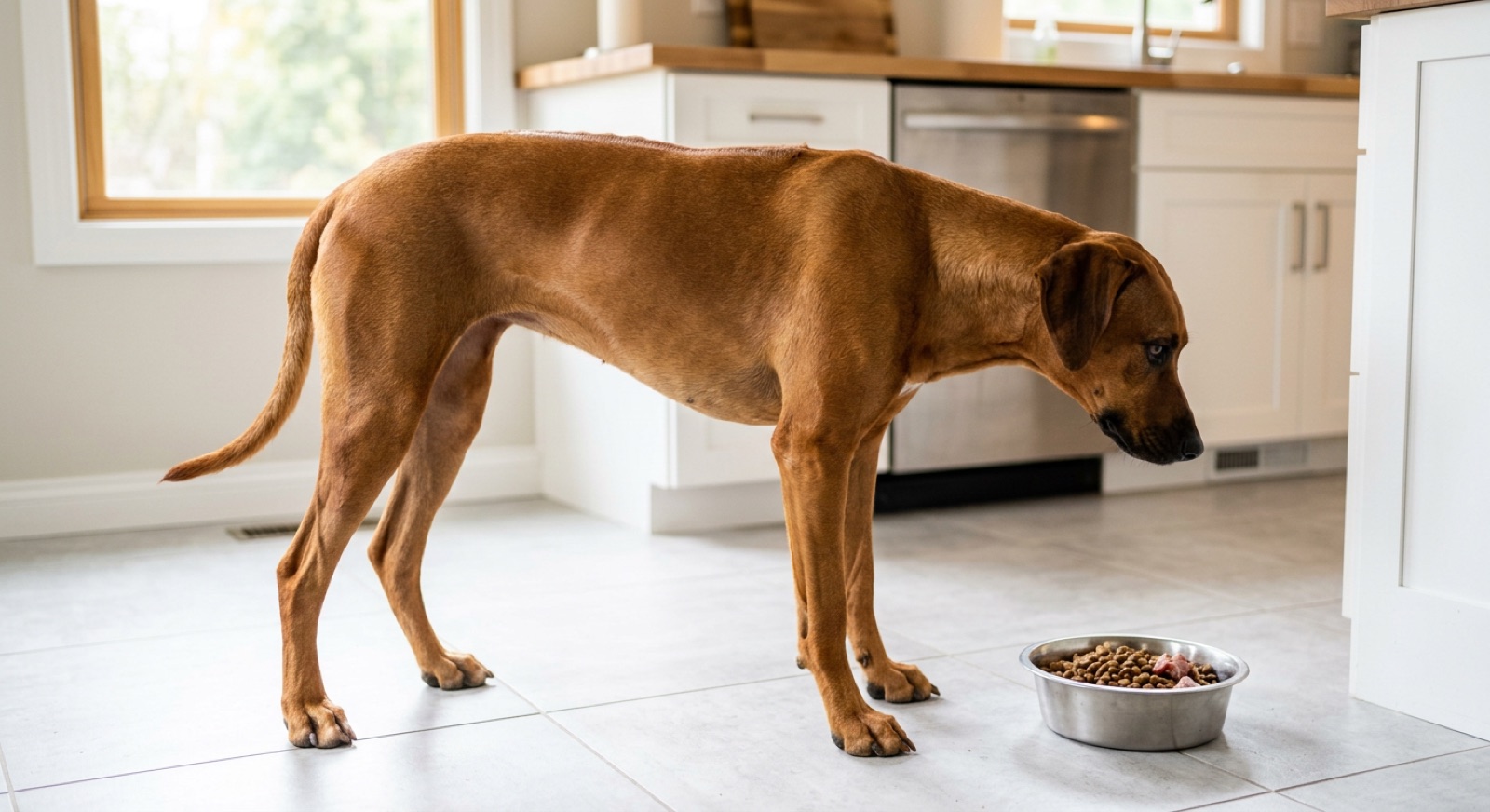
Why Rhodesian Ridgebacks end up needing a new home
The Canadian Kennel Club describes the Ridgeback as "dignified and even-tempered," notes the breed "may be reserved with strangers," and calls it "a strong protector of the home." Every one of those phrases sits behind a surrender story. The recurring reasons:
- Adolescent strength meeting an unprepared handler. The biggest driver. A Ridgeback puppy is manageable; the same dog at eighteen months is a powerful, self-assured hound that tests every boundary it was never taught. Walks stop being safe for the walker, and everything downstream follows.
- Prey drive discovered late. This is a big-game hound. Cats, small dogs, and wildlife can flip the switch, and some households find out after an incident rather than before. It is bred instinct, not malice.
- The guardian streak in a busy household. A dog that takes the door seriously and reserves judgement on strangers is doing its historic job, but in a home with constant visitors and kids' friends it becomes a management load the family never planned for.
- Exercise arithmetic. An athletic endurance hound that needs real daily mileage, not a garden.
- Housing and life changes. Size alone shrinks the rental pool, and moves are a steady trigger. Our moving guide covers that path.
None of this means your dog is broken. It means a serious, capable breed landed in a household that could not hold it, and a careful rehoming to an experienced home fixes exactly that.
The screening priorities unique to Rhodesian Ridgebacks
Ridgeback screening is about experience first and household composition second.
1. An experienced big-dog home. Ask what dogs the applicant has owned and handled. Previous Ridgeback experience is the strongest signal; comparable experience with strong, independent breeds is acceptable. The right adopter talks about structure, consistency, and calm leadership rather than dominance, expects the reserve with strangers, and can physically manage a powerful hound on leash. A first-time owner charmed by the ridge and the lion-hunting lore is the mismatch that created a large share of Ridgeback listings, so screen kindly but firmly.
2. An honest prey-drive match. If your dog has lived calmly with cats or small dogs, say so and describe the arrangement. If it has chased, grabbed, or fixated, say that too, and place only into a home without small resident animals. Secure physical fencing and leash discipline are part of the same conversation: a Ridgeback in pursuit does not consult its recall training.
3. A household matched to the guardian instinct. Ask about the pace of the home, the ages of any children, and how the applicant plans to handle introductions and visitors. Calm, structured households where the dog can be taught its job suit the breed; chaotic revolving-door homes do not, however kind. Describe your dog's actual door behaviour and stranger line so the match is made on facts.
What you must disclose
Ridgeback disclosure is behavioural, and the failure modes are serious enough that nothing gets soft-pedalled.
- Prey drive, with evidence. Every chase, grab, or fixation, and how the dog behaves on leash around cats, small dogs, and wildlife. This is the disclosure that decides whether the placement is safe.
- The stranger line and door behaviour. How the dog reads visitors, how long warming up takes, and what pushing too fast looks like.
- Any guarding of food, toys, space, or people. Described plainly, with the management that works.
- Any bite or snap history, in writing. Talk to your vet or a credentialled behaviour professional first, disclose everything, and place only into a proven, fully informed home. A private placement with an undisclosed bite history is indefensible in a breed this powerful.
- Leash strength and equipment. What your dog pulls like, what gear you use, and what has failed.
- Vet records, complete. Anything the vet has flagged, with the vet's name attached.
Rhodesian Ridgeback rescues and where to ask
Ridgeback-specific rescue is organized and experienced, and it spans the border. Contact them early, be complete about prey drive and any incident history so they can match correctly, and list on LocalPetFinder in parallel. One verified option:
Should you charge a rehoming fee?
Charge a rehoming fee. A few hundred dollars for a healthy adult Ridgeback is normal in Canada (this is a directional range, not a fixed rule), paired with a vet reference and a meeting at your home or theirs. The fee filters out impulse applicants drawn to a striking breed they have not researched, and it slows down the wrong-reasons buyer that any large guardian-type dog attracts. Donate it to the breed rescue afterward if you would rather not keep it.
How LocalPetFinder rehoming works
- Submit a free listing at /rehome/submit. Photos, age, breed, spay or neuter status, compatibility, an honest behavioural profile, your reason for rehoming, and a fee. The form takes about 5 minutes and your dog never leaves your home.
- We review it for completeness and basic safety, usually within 24 to 48 hours, then it goes live.
- Your Rhodesian Ridgeback appears alongside rescue dogs on the Rhodesian Ridgeback listings and the main adoption pages, marked “Owner Rehoming.” Your email stays private.
- You screen and choose. Vetted adopters reach you through a verified contact form. You decide who to respond to, who to meet, and who gets the dog.
Ready to rehome your Rhodesian Ridgeback responsibly?
List your Rhodesian Ridgeback on LocalPetFinder for free. Your listing appears next to rescue dogs, you control the screening, and we never share your email publicly.
Start Your Free Listing →Anti-scam rules (read every line)
- Never list as “free to good home.” A fair fee is the single best filter against flippers and bad-faith adopters.
- Insist on a meet-and-greet, ideally at the adopter's home. Anyone who refuses a home check is hiding their living situation.
- Be suspicious of anyone offering more than your fee, or pushing for a fast, no-questions handover.
- Get a written agreement and a vet reference, transfer the microchip registration, and prefer e-transfer over cash for a paper trail.