The short answer
Rehome your dog on LocalPetFinder, free
List your dog at no cost. They stay home until the right family is found, you screen adopters through a verified contact form, and you choose who adopts. Reviewed within 24 to 48 hours.
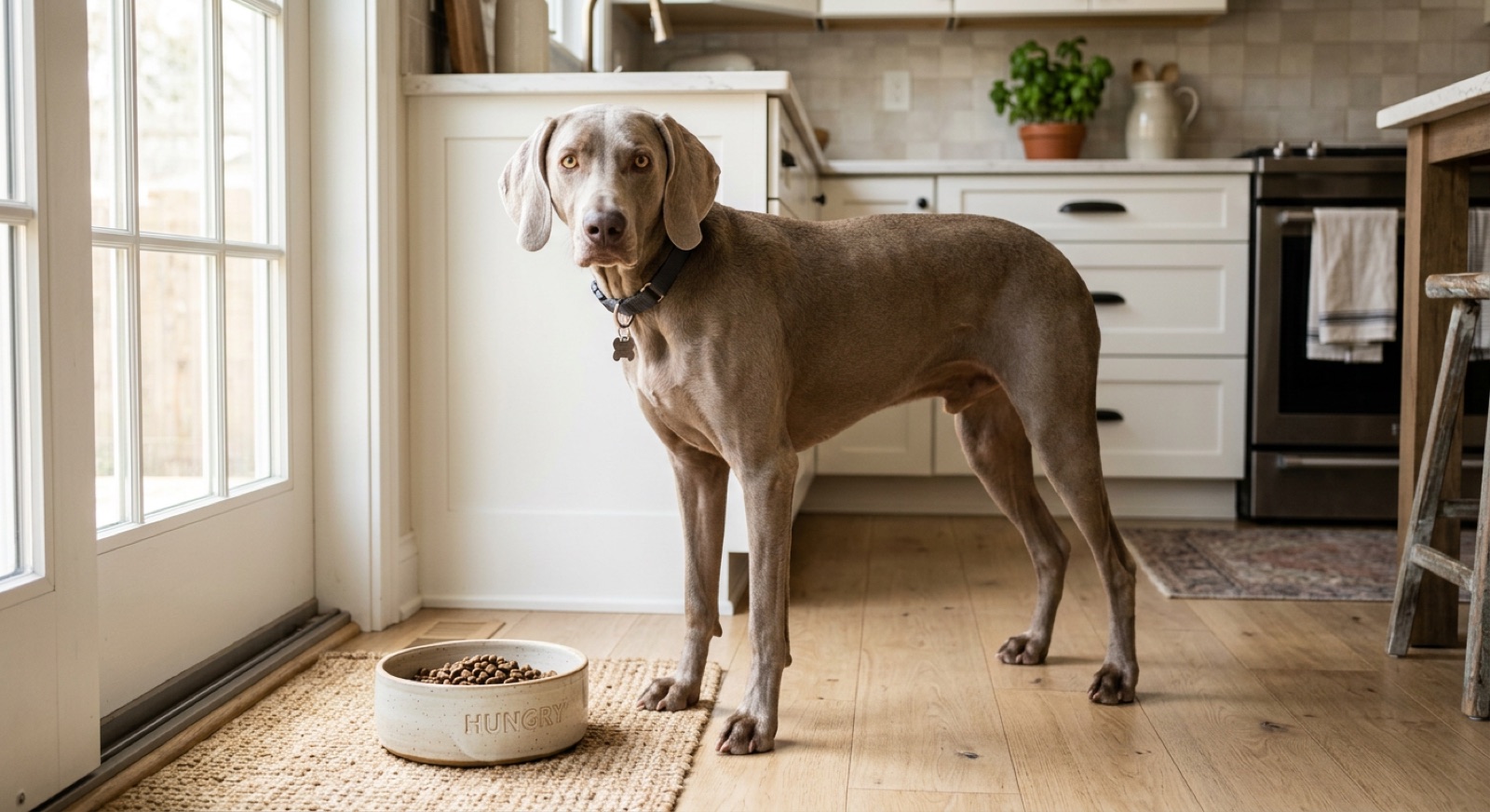
Why Weimaraners end up needing a new home
The Canadian Kennel Club describes a fearless, alert sporting dog bred to hunt all day beside its handler, and Ontario's Weimaraner rescue community is blunt about the acquisition pattern: people fall for the silver coat and the amber eyes without reading the temperament paragraph. The recurring surrender reasons:
- Separation distress. The defining Weimaraner failure mode. A breed built to spend the whole day with its person copes badly with long empty houses, and the barking, destruction, and escape attempts that follow are the most common road to a Weimaraner listing. The full reasoning lives in our Vizsla guide; Weimaraners fail the same way.
- The exercise floor. An adult Weimaraner is a genuine athlete that needs vigorous daily running and mental work. A walk around the block builds a restless sixty-pound dog with unspent drive, and the under-exercised behaviour compounds the alone-time problem.
- Prey drive. A pointing breed with a documented chase instinct. Cats, rabbits, and backyard wildlife are a real management question, and mixed-pet households discover it the hard way.
- Size plus intensity. A bored Weimaraner is a big, fast, counter-surfing, door-bolting dog, and households that could absorb a smaller mismatch cannot absorb this one.
- Schedule changes. The work-from-home arrangement ends, and the dog that was fine is suddenly alone six hours a day. Nothing about the dog changed.
None of this means your dog is broken. A Weimaraner that lands with active people who are home a lot is usually a devoted, easy companion.
The screening priorities unique to Weimaraners
Weimaraner screening is the Vizsla test with more dog attached: company and exercise, and the right home clears both.
1. How much is the dog alone? Ask for the honest weekly picture and the longest routine empty stretch. Work-from-home households, retirees who hike, and families with staggered schedules are the natural fit. An applicant with a nine-hour office day and good intentions is the same setup your dog is leaving. If your dog already shows separation distress, disclose it fully and screen hardest here.
2. What does the exercise week actually look like? Ask in hours and kilometres, not adjectives. Runners, hunters, hikers, and dog-sport households absorb a Weimaraner easily; "we have a big yard" is storage, not exercise. The workload does not drop in a Canadian January, and a short-coated grey dog needs the routine maintained through winter with a jacket rather than skipped.
3. Prey-drive honesty. If the applicant has cats or small pets, match against your dog's actual history, not hope. Untested is a legitimate answer; "probably fine" is not.
What you must disclose
Weimaraner disclosure is mostly about the two failure modes, told completely.
- Alone-time behaviour, in full. What the dog does in an empty house, the longest stretch it tolerates, any barking complaints, destruction, crate history, or escape attempts, and anything a vet or trainer has advised. This disclosure decides the placement.
- The real exercise routine. What your dog gets now, what it needs to be settled, and what an under-exercised week looks like in your house.
- Prey and chase behaviour, from history. Cats, small dogs, wildlife, bikes, and joggers.
- Behaviour with children and other dogs, from what you have actually seen. A bouncy sixty-pound adolescent and a toddler is a supervision question the new home should hear about honestly.
- Counter-surfing, door-bolting, and containment notes. How your dog tests a house, so the next one is ready on day one.
- Vet records, complete. Anything flagged, with the vet's name attached.
Weimaraner rescues and where to ask
Weimaraner-specific rescue in Canada is small and volunteer-run, so contact them early, be complete about alone-time behaviour, and list on LocalPetFinder in parallel. One verified option:
Should you charge a rehoming fee?
Charge a rehoming fee. A few hundred dollars for a healthy adult Weimaraner is normal in Canada (this is a directional range, not a fixed rule), paired with a vet reference and a meeting at your home or theirs. The silver coat draws looks-first applicants, which is often the acquisition pattern that created the listing, and a real fee plus a blunt exercise paragraph filters it out. Donate it to a Weimaraner rescue afterward if you would rather not keep it.
How LocalPetFinder rehoming works
- Submit a free listing at /rehome/submit. Photos, age, breed, spay or neuter status, compatibility, an honest behavioural profile, your reason for rehoming, and a fee. The form takes about 5 minutes and your dog never leaves your home.
- We review it for completeness and basic safety, usually within 24 to 48 hours, then it goes live.
- Your Weimaraner appears alongside rescue dogs on the Weimaraner listings and the main adoption pages, marked “Owner Rehoming.” Your email stays private.
- You screen and choose. Vetted adopters reach you through a verified contact form. You decide who to respond to, who to meet, and who gets the dog.
Ready to rehome your Weimaraner responsibly?
List your Weimaraner on LocalPetFinder for free. Your listing appears next to rescue dogs, you control the screening, and we never share your email publicly.
Start Your Free Listing →Anti-scam rules (read every line)
- Never list as “free to good home.” A fair fee is the single best filter against flippers and bad-faith adopters.
- Insist on a meet-and-greet, ideally at the adopter's home. Anyone who refuses a home check is hiding their living situation.
- Be suspicious of anyone offering more than your fee, or pushing for a fast, no-questions handover.
- Get a written agreement and a vet reference, transfer the microchip registration, and prefer e-transfer over cash for a paper trail.