The short answer
Rehome your dog on LocalPetFinder, free
List your dog at no cost. They stay home until the right family is found, you screen adopters through a verified contact form, and you choose who adopts. Reviewed within 24 to 48 hours.
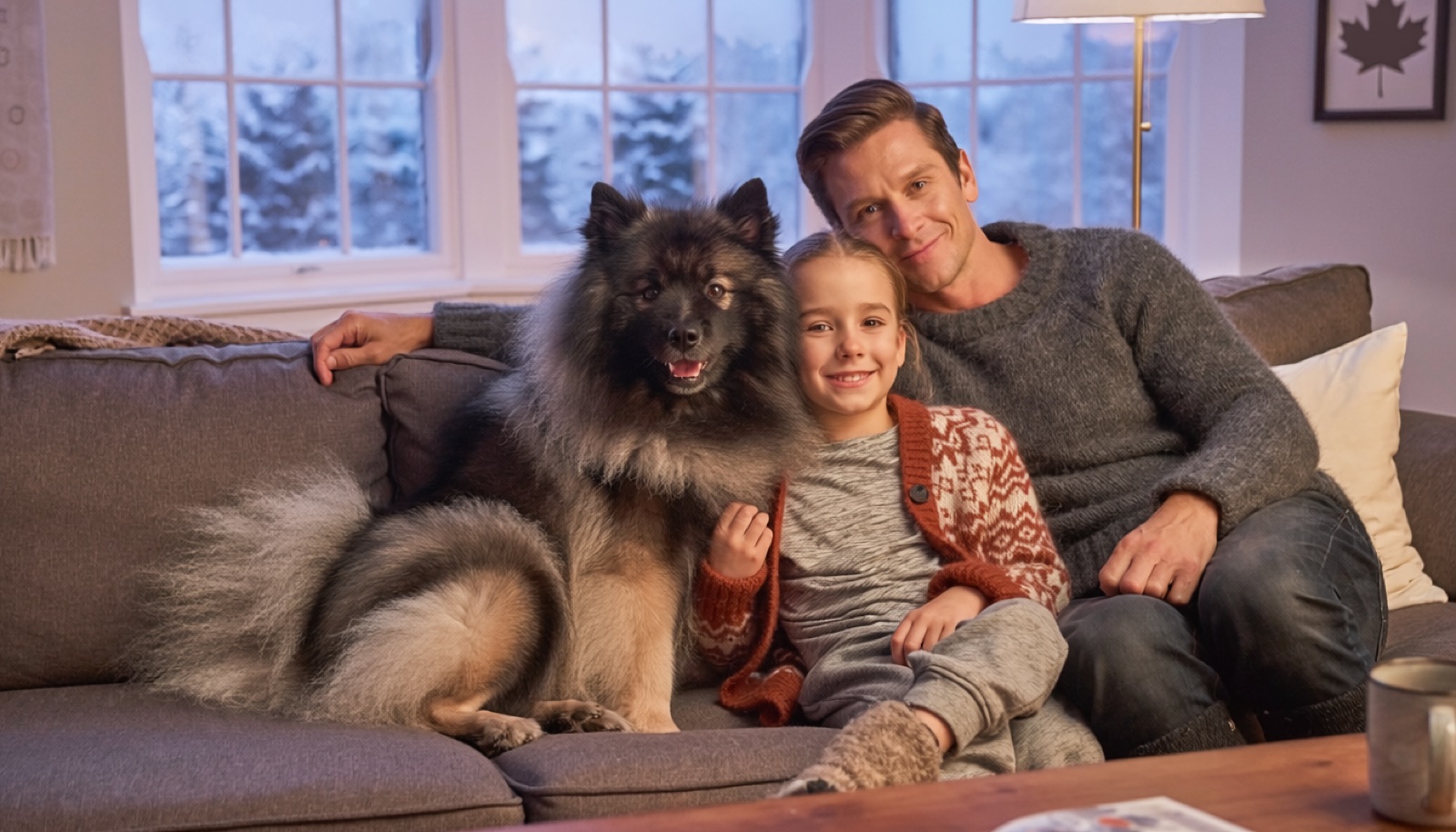
Why Keeshonden end up needing a new home
The Canadian Kennel Club describes the Keeshond simply: "The breed is loyal, protective and good with children." Behaviour problems are rarely the story here. The recurring reasons:
- Owner illness, aging, and estate situations. The signature Keeshond pattern. The breed is a decades-long favourite of older owners, and when health fails or a move into care happens, the dog needs a new family through no fault of anyone. Our owner-illness guide and inherited-dog guide exist for exactly these situations.
- A velcro dog in an empty house. Keeshonden were bred as barge dogs living on top of their families, and the modern version still runs on company. A household schedule change that leaves the dog alone all day produces distress barking, and the barking produces complaints.
- The barking itself. A Keeshond is an alert watchdog with an opinion about everything that passes the window. Training softens it; nothing removes it. In dense housing with thin walls it becomes a bylaw problem.
- The coat surprise. That striking silver-and-black coat needs regular weekly brushing and blows out seasonally in serious volume. It is more manageable than it looks, but households that never learned the routine fall behind.
- Allergies and new-baby bandwidth. The ordinary small-family-dog triggers, none of them breed failures.
None of this means your dog is a problem. A Keeshond surrendered over a life change is usually exactly the affectionate, intact family dog the next home is hoping for.
The screening priorities unique to Keeshonden
Keeshond screening is about time and presence more than experience.
1. A home where people are actually around. This is the breed line. Ask what the household's normal day looks like and how many hours the dog would be alone. Retirees, work-from-home households, and families with someone usually present are the natural fit; a house empty from eight to six is the exact setting that produces the distress barking that ends placements. A Keeshond does not need acreage or athletic owners; it needs company.
2. Honest bark tolerance. Say plainly in the listing that the dog announces visitors, delivery trucks, and passing dogs, and let the housing situation self-select. Detached homes, tolerant neighbours, or rural settings all work; a noise-sensitive condo does not, however much the applicant loves the fluff.
3. A gentle handover, matched to the breed's attachment. Keeshonden bond hard, and a dog losing its person deserves a soft landing: a meet at a calm home rather than a chaotic public handoff, the dog's own bed and routine notes travelling with it, and an adopter briefed that the first weeks are about building trust through presence. If the dog is being rehomed because its person is ill or has died, tell the adopter that story; it changes how they read the dog's grief, and Keeshond people respond to it.
What you must disclose
Keeshond disclosure is mostly practical, and the practical truths keep the placement stable.
- The alone-time reality. How long the dog has been used to having company, and what happens (barking, pacing, door-watching) when it is left. This decides the household fit more than any other line.
- The barking pattern, honestly. When, how much, and anything the neighbours have said.
- The coat's condition and routine. Current matting if any, the weekly brushing that keeps it healthy, and a warning never to shave the double coat, which protects against both cold and heat.
- Behaviour with children, dogs, and cats. The breed's family reputation is deserved, but describe your dog, not the breed.
- Routine, habits, and comforts. Feeding times, walking routes, the spot on the couch. For a dog losing its family, the routine notes are worth more than anything else in the handover box.
- Vet records, complete. Anything the vet has flagged, with the vet's name attached.
Keeshond rescues and where to ask
Keeshond rescue in Canada is small, volunteer-run, and genuinely devoted, and because adult Keeshonden are scarce, rescues often have waiting adopters. Contact them early and list on LocalPetFinder in parallel. One verified option:
Should you charge a rehoming fee?
Charge a rehoming fee. A few hundred dollars for a healthy adult Keeshond is normal in Canada (this is a directional range, not a fixed rule), paired with a vet reference and a meeting at your home or theirs. The fee filters out impulse applicants drawn to the coat, and it selects for the settled, people-present home the breed needs. If you are rehoming on behalf of an ill or deceased family member, the screening matters more than the money; keep the fee, waive it for the right verified home, or donate it to Keeshond Rescue Ontario as feels right.
How LocalPetFinder rehoming works
- Submit a free listing at /rehome/submit. Photos, age, breed, spay or neuter status, compatibility, an honest behavioural profile, your reason for rehoming, and a fee. The form takes about 5 minutes and your dog never leaves your home.
- We review it for completeness and basic safety, usually within 24 to 48 hours, then it goes live.
- Your Keeshond appears alongside rescue dogs on the Keeshond listings and the main adoption pages, marked “Owner Rehoming.” Your email stays private.
- You screen and choose. Vetted adopters reach you through a verified contact form. You decide who to respond to, who to meet, and who gets the dog.
Ready to rehome your Keeshond responsibly?
List your Keeshond on LocalPetFinder for free. Your listing appears next to rescue dogs, you control the screening, and we never share your email publicly.
Start Your Free Listing →Anti-scam rules (read every line)
- Never list as “free to good home.” A fair fee is the single best filter against flippers and bad-faith adopters.
- Insist on a meet-and-greet, ideally at the adopter's home. Anyone who refuses a home check is hiding their living situation.
- Be suspicious of anyone offering more than your fee, or pushing for a fast, no-questions handover.
- Get a written agreement and a vet reference, transfer the microchip registration, and prefer e-transfer over cash for a paper trail.